
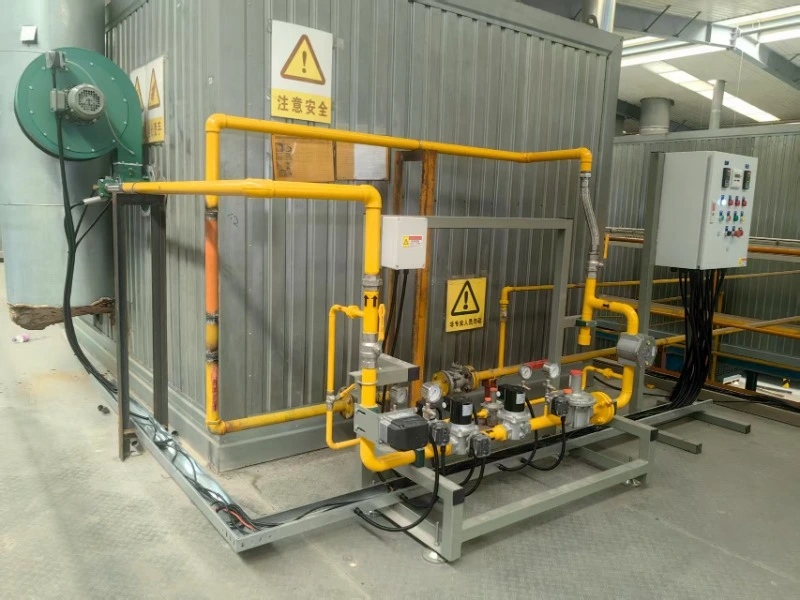
Why Is Your Custom Combustion System Not Working? Common Causes and Solutions
Root-Cause Diagnosis
Your Custom Combustion System is usually not working because measured air, fuel, load, emissions control, or safety feedback no longer matches the commissioned design. For many natural-gas boiler systems, about 10% excess air is attainable, but acceptance still depends on CO, flame stability, OEM limits, local code, permit basis, and site conditions [1].
Field Troubleshooting Priorities
- High fuel use: If excess air is far above the commissioned point, compare it with the roughly 10% attainable benchmark for many well-designed natural-gas systems and retune with a calibrated analyzer [1].
- Stack loss: If stack temperature is elevated, use the 40°F stack-temperature rule of thumb for about 1% efficiency impact as a screening signal, then verify heat-transfer fouling and draft [1].
- NOx retrofit fault: If FGR was added, confirm the burner is designed for stable flame with recirculated inert gas before accepting a 60% to 90% NOx reduction claim [2].
- Short cycling: If the process load falls below low fire, check whether a 10:1 turndown still leaves the burner at 10% of full capacity and compare that value with the hourly load curve [4].
- Compliance uncertainty: If the plant is in the 1 MW to less than 50 MW range, verify the Directive 2015/2193 or local permit category before selecting NOx controls [3].
Air-Fuel Ratio
Well-designed natural-gas boiler systems can often operate near 10% excess air, while reducing excess air by 15 percentage points can improve boiler efficiency by about 1% under comparable conditions [1]. If the combustion setup runs far above that range, stack losses rise; if it runs too lean on oxygen, CO and flame-instability risk can increase [1][2].
A Custom Combustion System is not judged by flame color alone. Use a calibrated analyzer to record O2, CO, stack temperature, firing rate, fuel pressure, and draft at low fire, mid fire, and high fire. Lower oxygen is not automatically better because the correct point depends on burner geometry, fuel composition, process temperature, permit basis, and OEM acceptance limits.
Load Mismatch
A 10:1 turndown ratio means the burner can reduce to 10% of full capacity before cycling, while a 5:1 burner bottoms out at 20% of full capacity [4]. If the real process load often sits below the minimum stable firing rate, the system may short-cycle, miss temperature targets, or overheat lightweight process zones.
Custom systems fail when the selected burner capacity matches peak demand but ignores daily low-load operation. Confirm the heat balance, minimum stable firing rate, control-valve authority, fan VFD range, and process ramp profile. For ovens, furnaces, dryers, and thermal oil heaters, load swings can be more important than nameplate maximum capacity.
NOx Control Risk
EPA AP-42 states that low-NOx burners combined with flue gas recirculation can reduce NOx emissions by 60% to 90% in suitable natural-gas boiler applications [2]. The same source explains that FGR increases inert gas flow and must be matched with a burner designed to sustain stable flame under those conditions [2].
If a system becomes unstable after an emissions retrofit, verify FGR damper position, recirculation fan performance, burner pressure drop, flame-safeguard signal strength, and oxygen trim response. A NOx target cannot be accepted in isolation; the commissioning record must also show CO, flame stability, stack temperature, and minimum-load behavior.
Emission Basis
EU Directive 2015/2193 regulates medium combustion plants from 1 MW to less than 50 MW thermal input and sets emission-limit values by plant type, fuel, age, and oxygen reference basis [3]. Applying a generic NOx number without the correct MW range, fuel category, oxygen basis, and permit date can lead to the wrong burner or control package [3].
For international B2B projects, the buyer should provide the permit basis before final burner selection. A gas boiler limit, gas turbine limit, local environmental permit, and insurer requirement are not interchangeable. When the limit is not provided, record it as to be confirmed instead of designing around an assumed value.
Safety Interlocks
The National Board maintenance guidance lists daily checks such as burner flame checks and low-water cutoff testing, with annual professional boiler inspection commonly recommended by jurisdictions and insurers [5]. If safety checks are skipped, a combustion fault may appear as nuisance trips, lockouts, delayed ignition, or unexplained shutdowns.
Before Replacing the System
- Application fit: Confirm equipment type, fuel, load curve, process temperature, and minimum stable firing rate before choosing a burner, control panel, FGR package, or valve train.
- Limits: A method that works on a natural-gas boiler may not transfer directly to a kiln, dryer, furnace, thermal oil heater, gas turbine, or mixed-fuel process.
- Operational risks: Verify CO, flame signal, stack temperature, fuel pressure, draft, NOx basis, downtime risk, and controls integration before approving replacement.
- Required confirmation: Request OEM manuals, local code requirements, permit conditions, insurer comments, site engineer approval, combustion-test reports, and commissioning records.
Terms That Affect Diagnosis
- Custom Combustion System: A burner, fuel train, air system, controls, and safety package configured around a specific industrial heat process.
- Excess air: Combustion air above stoichiometric demand; too much raises stack loss, while too little can raise CO and instability risk.
- FGR: Flue gas recirculation returns part of the exhaust stream to lower peak flame temperature and NOx formation in suitable designs.
- Turndown ratio: The ratio between maximum and minimum firing rate; 10:1 means 10% minimum load before cycling in the cited boiler example.
- NOx basis: Emissions limits depend on fuel, plant size, oxygen reference basis, date, jurisdiction, and permit conditions.
- Flame safeguard: A safety control that verifies flame and shuts fuel flow when unsafe operating conditions are detected.
Verified Troubleshooting Data
| Issue | Condition | Value | Evidence | Action |
|---|---|---|---|---|
| High fuel use | Natural-gas boiler tuning | 10% excess air attainable | DOE/NREL steam tip sheet [1] | Measure O2, CO, and stack temperature at 3 firing points. |
| Stack loss | Comparable operating conditions | 1% efficiency per 40°F stack-temperature reduction | DOE/NREL rule of thumb [1] | Check fouling, excess air, economizer condition, and draft. |
| NOx instability | Low-NOx burner plus FGR | 60% to 90% NOx reduction possible | EPA AP-42 natural gas combustion [2] | Verify FGR rate, flame signal, CO, and burner suitability. |
| Wrong permit basis | Medium combustion plant scope | 1 MW to less than 50 MW | EUR-Lex Directive 2015/2193 [3] | Confirm jurisdiction, fuel, oxygen basis, date, and permit text. |
| Short cycling | Modulating boiler or burner | 10:1 turndown equals 10% minimum load | U.S. Boiler turndown explanation [4] | Compare minimum firing rate with hourly process demand. |
| Safety lockout | Boiler maintenance program | Daily checks and annual inspection guidance | National Board guidance [5] | Review proof tests, cause-of-trip log, and insurer requirements. |
Repair Sequence
Three tests usually separate a control problem from a hardware problem: a combustion analyzer test at 3 firing points, a control-loop response check, and a safety-interlock proof test. If these tests are missing, replacement decisions are premature because the same fault can reappear after a new burner is installed.
Start with site evidence. Ask for trend logs, fuel invoices, stack-test reports, burner manuals, P&ID drawings, control-panel logic, fuel-train settings, and maintenance records. Then compare measured values with OEM limits and local code. Only replace the burner, fan, valve train, or control panel after confirming the failed component and the operating condition that caused the fault.
Frequently Asked Questions (FAQ)
REFERENCES AND DATA SOURCES:
- U.S. Department of Energy / NREL, “Improve Your Boiler’s Combustion Efficiency,” Steam Tip Sheet, supports excess-air and stack-temperature efficiency rules of thumb.
- U.S. Environmental Protection Agency, AP-42 Chapter 1.4 “Natural Gas Combustion,” final section listing, supports NOx formation, FGR operation, and low-NOx burner plus FGR reduction ranges.
- EUR-Lex, Directive (EU) 2015/2193 on the limitation of emissions from medium combustion plants, defines the 1 MW to less than 50 MW scope and emission-limit framework.
- U.S. Boiler Company, “What Does Boiler Turndown Ratio Mean?”, explains 5:1 and 10:1 minimum-load examples.
- National Board of Boiler and Pressure Vessel Inspectors, boiler maintenance guidance, lists routine burner-flame, low-water cutoff, and inspection practices.