
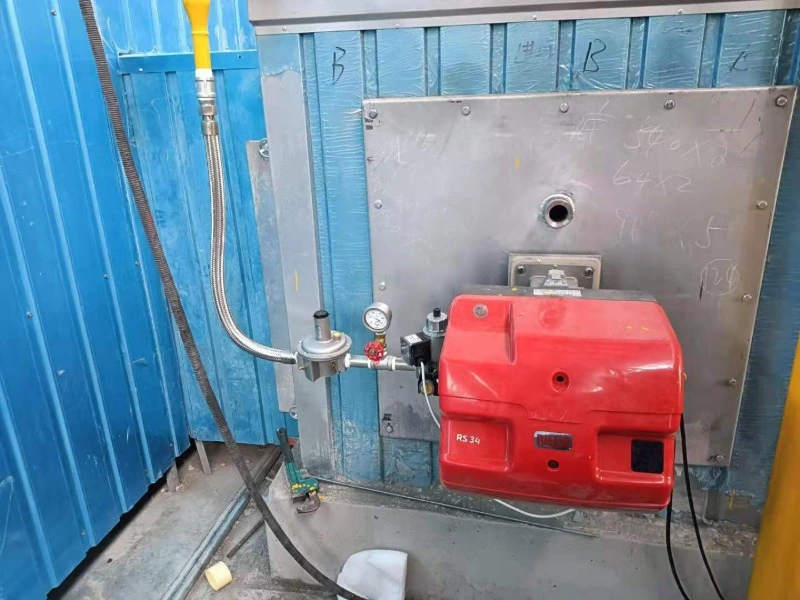
How to Choose an Industrial Burner for Boiler Replacement
Root-Cause Diagnosis
Choose an Industrial Burner for Boiler Replacement by proving firing range, oxygen control, emissions basis, and safety integration before purchase. For many well-designed natural-gas boilers, 10% excess air is attainable, but acceptance still depends on CO, flame stability, OEM limits, permit conditions, and site commissioning data [1].
Field Troubleshooting Priorities
- Combustion margin: If flue-gas O2 is being reduced, verify CO and flame signal before accepting a target near 10% excess air on natural gas [1].
- Efficiency case: If the retrofit claims fuel savings, compare tested stack temperature and excess air because 15 excess-air percentage points or 40 deg F stack temperature can equal about 1 efficiency point [1].
- NOx compliance: If the boiler falls under a 1-50 MW medium combustion plant framework, confirm the applicable ELV by fuel, plant type, and new-or-existing status before choosing a burner [2].
- Low-NOx method: If FGR is proposed, require fan and flame-stability validation because low-NOx burners with FGR can reduce NOx by 60-90% only in suitable systems [4].
- Safety interval: If controls or valve trains are modified, include burner components, flame failure systems, interlocks, shutoff valves, and combustion controls in a semiannual check plan [6].
Start With Verified Boiler Duty
A replacement burner should be sized against the boiler’s real firing range, steam load profile, furnace geometry, and fuel condition before purchase. A practical shortlist should confirm maximum capacity, stable low-fire operation, and whether 10% excess air is attainable on a well-designed natural-gas system under tested site conditions [1].
Nameplate output alone is not enough because many boiler problems come from load mismatch, poor air-fuel control, unstable low-fire operation, or a burner that cannot maintain acceptable excess air across the operating range. Ask the supplier to document the burner model, fuel type, fan arrangement, combustion head, turndown ratio, burner management interface, and commissioning method.
For a B2B buyer, the first decision is whether the replacement is a like-for-like service repair or a performance retrofit. A service replacement mainly restores reliability. A performance retrofit should also target fuel savings, emissions compliance, lower purge and cycling losses, and easier maintenance.
Check Oxygen And Excess Air
Flue-gas oxygen and stack temperature are primary indicators of boiler combustion efficiency. Too little excess air can create carbon monoxide, soot, smoke, and unburned fuel, while too much excess air increases hot flue-gas flow and reduces fuel-to-steam efficiency [1].
For many natural-gas boiler replacement projects, the buyer should request a commissioning report that records O2, CO, stack temperature, firing rate, fuel pressure, draft, and ambient conditions. DOE/NREL guidance states that well-designed natural-gas systems can reach about 10% excess air, and that boiler efficiency may improve by about 1 percentage point for each 15 percentage-point reduction in excess air or each 40 deg F reduction in stack gas temperature when other conditions are comparable [1].
Do not specify the lowest possible oxygen number as a universal target. The acceptable O2 range depends on burner design, fuel quality, furnace pressure, control accuracy, and safety margin. If oxygen is pushed too low, CO and flame instability can rise even when the stack-loss calculation looks attractive.
Match NOx Requirements
Low-NOx performance must be selected against the permit basis, fuel, plant size, reference oxygen condition, and local enforcement date. In the EU Medium Combustion Plant Directive, emission limit values are set for 1-50 MW plants and are differentiated by fuel, plant type, and whether the plant is new or existing [2].
For many boiler buyers, the replacement burner decision is tied to whether the existing burner can meet upcoming NOx limits after commissioning. In England and Wales guidance for medium combustion plants, the regulator instructs operators to check the emission limit value before applying for a permit and to monitor compliance against permit conditions [3].
Low-NOx burner technology reduces thermal NOx by staging combustion and lowering peak flame temperature. EPA AP-42 reports observed NOx reductions of 40-85% for low-NOx burners on natural-gas boilers, and 60-90% when low-NOx burners are combined with flue gas recirculation in suitable systems [4].
Evaluate FGR And Controls
FGR is not a simple add-on because the recirculated flue gas changes flame stability, fan duty, oxygen availability, and burner geometry. EPA describes FGR as a system that returns part of the flue gas to the burner windbox, where it mixes with combustion air before entering the burner [4].
When FGR is required, confirm that the burner is designed for stable operation with inert gas in the combustion air stream. The project should include fan capacity checks, damper control, oxygen-trim compatibility, burner management logic, and a commissioning curve at multiple firing points.
The control package matters as much as the burner head. A replacement burner should be reviewed with its fuel valve train, actuators, VFD fan control, O2 trim, flame safeguard, purge sequence, and alarm history. Poor controls can erase the efficiency gain of a better combustion head.
Confirm Turndown And Load Profile
Turndown should be selected from measured boiler demand, not from a brochure maximum. A 10:1 turndown burner can reduce cycling on variable-load natural-gas boilers, but only if the boiler, controls, draft, and flame safeguard remain stable at low fire.
If the plant often operates below 30% of boiler capacity, low-fire stability may matter more than peak capacity. Frequent cycling increases purge losses, thermal stress, and nuisance trips. Ask the supplier to provide the stable low-fire input, ignition position, minimum modulation point, and required draft condition.
Higher turndown is not automatically better. A burner with a wider modulation range may need more precise air-fuel linkage, better actuator repeatability, and stricter commissioning discipline. The acceptance test should record O2, CO, flame signal, furnace pressure, and response time at low, mid, and high fire.
Verify Safety And Inspection Fit
Safety acceptance must be based on the OEM manual, local code, insurer requirements, and site commissioning report. National Board guidance notes that jurisdictions and insurers recommend annual internal and external inspections of power boilers while not under pressure, with an external inspection under pressure suggested midway between annual inspections [5].
The replacement scope should also include burner components, flame failure devices, interlocks, shutoff valves, gauges, instruments, combustion controls, and safety relief valve testing where applicable. National Board maintenance guidance lists several of these checks on a semiannual basis, with annual tasks following in the maintenance schedule [6].
Before issuing a purchase order, require a written method statement for lockout, valve train verification, purge test, ignition trial, flame failure response, low-water cutoff interface, and combustion tuning. If the boiler is insured, the insurer’s inspector may need to review the retrofit before startup.
Before Replacing the System
- Application fit: Confirm boiler type, fuel, furnace pressure, load profile, available fan power, and whether the plant is a 1-50 MW medium combustion plant subject to emission-limit review [2].
- Limits: Do not approve a burner only from catalog capacity if oxygen, CO, stack temperature, low-fire stability, and NOx basis are not tested under site load conditions.
- Operational risks: Lower excess air can improve efficiency, but inadequate excess air can produce carbon monoxide, smoke, soot, and unburned fuel [1].
- Required confirmation: Ask the OEM, local code authority, permit regulator, insurer, and site engineer to confirm the retrofit scope before startup and commissioning.
Terms That Affect Diagnosis
- Industrial burner: The combustion device that mixes fuel and air, stabilizes flame, and modulates heat input into the boiler furnace.
- Boiler replacement: In this article, replacement means changing the burner package on an existing boiler, not automatically replacing the pressure vessel.
- Excess air: Air supplied above stoichiometric demand to complete combustion; too little raises CO risk and too much increases stack loss [1].
- Low-NOx burner: A burner that stages fuel or air to reduce peak flame temperature and suppress thermal NOx formation [4].
- FGR: Flue gas recirculation returns part of the stack gas to the burner windbox to dilute the combustion air stream and reduce NOx formation in suitable designs [4].
- Turndown ratio: The ratio between maximum and minimum stable firing input, such as 10:1, which affects cycling, low-load stability, and control repeatability.
Verified Troubleshooting Data
| Issue | Condition | Value | Evidence | Action |
|---|---|---|---|---|
| Excess air | Well-designed natural-gas boiler system | About 10% attainable | DOE/NREL combustion efficiency guidance [1] | Verify O2, CO, stack temperature, and flame stability during commissioning. |
| Efficiency gain | Comparable operating conditions | About 1% per 15% excess-air reduction or 40 deg F stack-temperature reduction | DOE/NREL rule of thumb [1] | Request before-and-after combustion test data, not only brochure savings claims. |
| NOx framework | EU medium combustion plants | 1-50 MW scope | Directive (EU) 2015/2193 [2] | Confirm plant size, fuel category, new/existing status, and permit basis. |
| Low-NOx option | Natural-gas boilers using low-NOx burners | 40-85% NOx reduction observed | EPA AP-42 natural gas combustion chapter [4] | Match burner type to the required NOx limit and verify CO after tuning. |
| Low-NOx plus FGR | Suitable burner and FGR system combination | 60-90% NOx reduction capability | EPA AP-42 control discussion [4] | Require fan, duct, damper, and low-fire flame stability checks. |
| Inspection planning | Power boiler inspection relationship | Annual internal and external inspection commonly recommended | National Board inspection guidance [5] | Coordinate insurer and jurisdictional inspection before returning the boiler to service. |
Build The Supplier Checklist
A technically defensible Industrial Burner for Boiler Replacement shortlist should include at least 8 evidence items: boiler model, rated input, fuel analysis, historical load profile, stack test data, permit limits, control panel interface, and site safety requirements. Missing data should be marked as “to be confirmed” instead of replaced with assumptions.
Ask each supplier to provide a burner data sheet, dimensional drawing, flame shape guidance, control schematic, fuel-train scope, expected turndown, emissions basis, commissioning plan, spare-parts list, and after-sales support method. For overseas procurement, also confirm packing, lead time, documentation language, remote support availability, and warranty exclusions.
Use a comparison matrix that separates verified performance from supplier claims. A burner that promises low NOx but lacks the required oxygen basis, fuel basis, boiler compatibility, and commissioning procedure should not be treated as equivalent to a fully engineered retrofit package.
Frequently Asked Questions (FAQ)
REFERENCES AND DATA SOURCES:
- U.S. Department of Energy and National Renewable Energy Laboratory, “Improve Your Boiler’s Combustion Efficiency,” Steam Energy Tips No. 4, states the cited stack-temperature, flue-gas oxygen, excess-air, and efficiency rule-of-thumb data.
- European Union, “Directive (EU) 2015/2193 on the limitation of emissions of certain pollutants into the air from medium combustion plants,” EUR-Lex legal text, defines the EU emission-limit framework for medium combustion plants.
- UK Environment Agency, Natural Resources Wales, Defra, and Welsh Government, “Medium combustion plant (MCP): comply with emission limit values,” official guidance, explains ELV checks, permit relevance, and monitoring expectations.
- U.S. Environmental Protection Agency, “AP-42, Chapter 1.4: Natural Gas Combustion,” technical PDF, is cited because the official EPA chapter is available as a PDF and provides the referenced low-NOx burner and FGR reduction ranges.
- National Board of Boiler and Pressure Vessel Inspectors, “Maintaining Proper Boiler Inspections Through Proper Relationships,” public guidance, states the cited annual power-boiler inspection expectation.
- National Board of Boiler and Pressure Vessel Inspectors, “Boiler Maintenance,” public checklist, lists the cited semiannual burner, flame failure, interlock, valve, instrument, and combustion-control checks.