An automotive process-heating project needs more than a standalone industrial gas burner. The burner, fuel train, combustion controls, installation layout, and commissioning plan must work as one system. For this project in Vietnam, Heatflam coordinated a Riello HTDR burner system with the gas train, control cabinet, field wiring, and on-site technical support required for practical installation.
The U.S. Department of Energy identifies paint drying in automobile manufacturing as one example of industrial process heat and notes that process-heating equipment requires reliable energy delivery and robust controls. This case concerns an automotive manufacturing project, but the customer’s exact heated process is not disclosed.
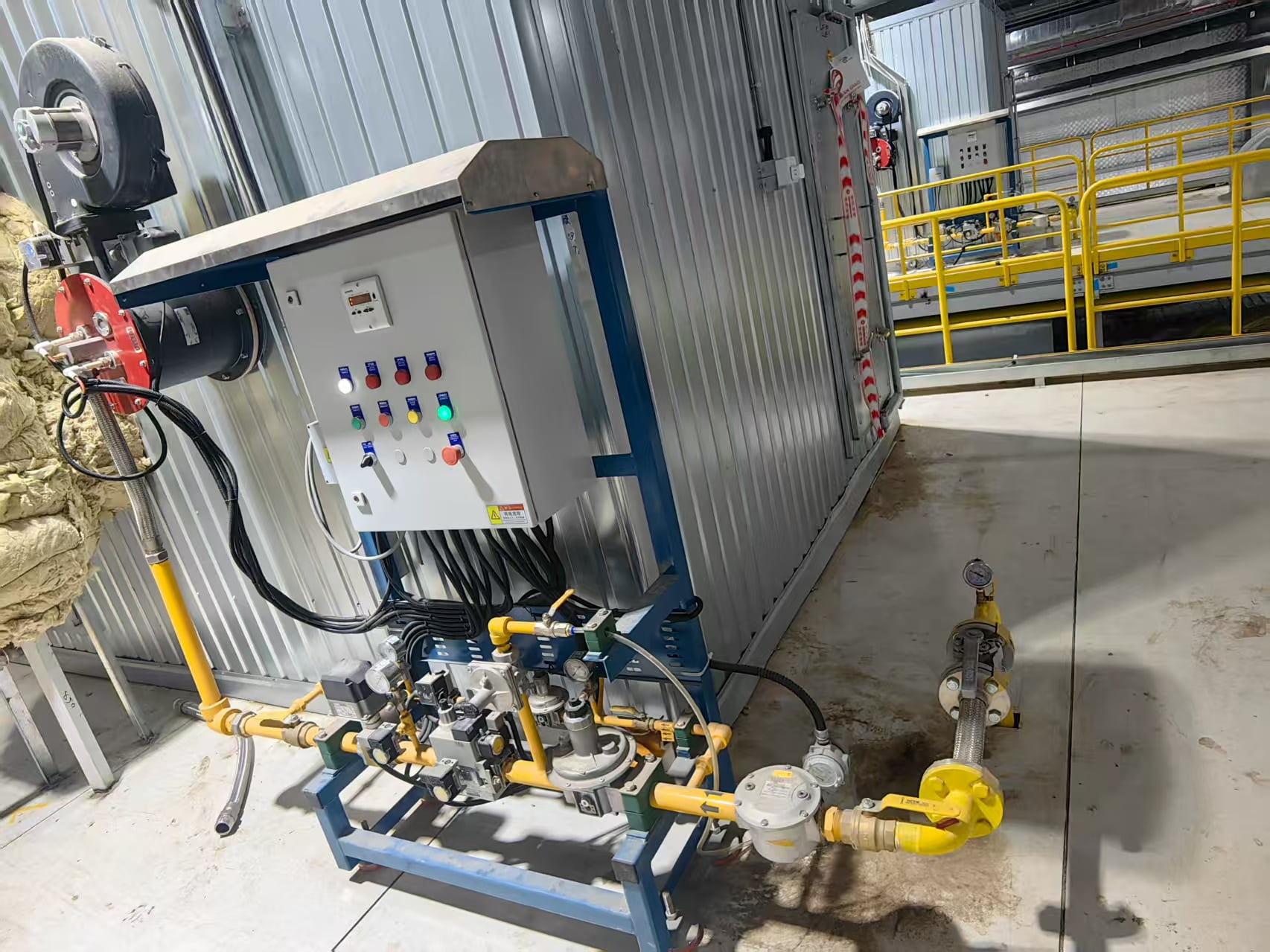
See the installed Riello HTDR burner system, integrated industrial gas train, combustion control cabinet, pre-delivery equipment, and on-site commissioning context.
What Did the Vietnam Automotive Project Require?
The project required an integrated burner system rather than a loose collection of components. The visible project scope includes the burner package, skid-mounted gas-train components, a dedicated control cabinet, connected instrumentation, and field wiring. The same equipment was documented before delivery and after installation in Vietnam.
This approach keeps the key interfaces clear before site work begins. Burner duty, gas pressure, valve-train arrangement, electrical supply, control signals, interlocks, mounting position, and available installation space must be reviewed together. A mismatch at any interface can delay commissioning even when each individual component is technically suitable.
Why Use a Riello HTDR Burner System for Automotive Process Heating?
Riello describes the HTDR as a process-burner solution for industrial applications with an exceptional turndown capability. That makes the series relevant when a process heating burner must respond across changing thermal demand instead of operating at one fixed load.
High turndown is only one part of selection. The correct Riello HTDR industrial burner must still be matched to required heat output, chamber or duct pressure, fuel conditions, temperature profile, control method, electrical supply, and installation geometry. The exact HTDR model used in this project is intentionally not stated because the confirmed project selection sheet is not available for publication.
What Was Included in the Integrated Industrial Burner System?
The project photographs show a coordinated combustion package built around the HTDR series burner. The installed and pre-delivery views document the following scope:
- Industrial burner package: the process burner and blower assembly prepared for the automotive heating application.
- Industrial gas train: regulators, valves, pressure instruments, switches, piping, and related components arranged on a structural skid.
- Combustion control system: a dedicated cabinet with operator controls, status indication, protection logic, and field connections.
- Mechanical and electrical integration: coordinated supports, piping routes, cable routing, and interfaces between the burner gas train system and the process equipment.
- Field support: installation checks, burner tuning, and technical support during on-site commissioning in Vietnam.
For buyers comparing an industrial burner system for the automotive industry, this system-level scope is important. Heatflam’s role is to connect burner selection with practical industrial combustion solutions and system integration, not simply to ship an isolated burner.
How Do the Gas Train and Combustion Controls Work as One Package?
A burner gas train system conditions, isolates, and controls the fuel supply delivered to the burner. The combustion control system coordinates burner sequencing, operating commands, status indication, and the required process interfaces. Their layouts must be developed together so pressure instruments, shut-off devices, actuators, control signals, and maintenance access remain practical after installation.
The project photographs show the gas train and control cabinet mounted on the same support frame, with piping and cables organized for site connection. This integrated burner system arrangement reduced the number of separate assemblies that had to be coordinated at the automotive site. It does not, by itself, establish compliance with a specific local code; the applicable safety and electrical requirements must be confirmed for each installation.
What Happened During Burner Commissioning in Vietnam?
Heatflam provided on-site burner commissioning support in Vietnam. The documented field phase included installation checks, combustion tuning, and technical support for the integrated industrial combustion system. These activities connect the engineered package to actual site conditions and operating commands.
Commissioning does not replace project design verification. Before firing and adjustment, the responsible project team must confirm fuel conditions, electrical connections, process permissives, ventilation, exhaust or draft conditions, emergency logic, and the applicable site procedures. Final settings depend on the actual process load and installation.
What Should Buyers Provide for a Similar Automotive Industry Burner Project?
A useful RFQ allows the burner and the complete combustion package to be evaluated together. Submit the following information before model selection:
| RFQ input | Why it matters |
|---|---|
| Fuel type and composition | Defines burner configuration, valve-train components, and adjustment basis. |
| Required heat output and load profile | Establishes firing duty and the real turndown requirement. |
| Process temperature and heating method | Clarifies direct or indirect heating duty and the required control response. |
| Chamber, duct, or furnace pressure | Needed to check the burner’s available operating envelope. |
| Available gas pressure | Drives regulator, valve, and gas-train sizing. |
| Voltage, frequency, and control interface | Defines the control cabinet, field signals, and electrical interfaces. |
| Layout, connection points, and site constraints | Allows practical skid, piping, cable, and service-access planning. |
| Applicable code and site safety requirements | Defines project-specific component, documentation, and validation requirements. |
For an industrial gas burner system for a Vietnam automotive project, also identify who is responsible for local installation, gas supply, process controls, commissioning access, and final acceptance. Clear responsibility boundaries reduce interface gaps during delivery and start-up.
Frequently Asked Questions
Send your fuel data, heat duty, process temperature, pressure conditions, control requirements, site layout, and commissioning scope. Heatflam will review the burner, gas train, controls, and system interfaces as one project.
REFERENCES AND DATA SOURCES:
- Riello – Riello at AHR Expo 2026 in Las Vegas (Published 2026-02-11).
- U.S. Department of Energy – Process Heat Basics (Accessed 2026-08-17).
- U.S. Department of Energy – Process Heating Systems (Accessed 2026-08-17).
