What Was Engineered for the Tianjin Automotive E-Coating Project?
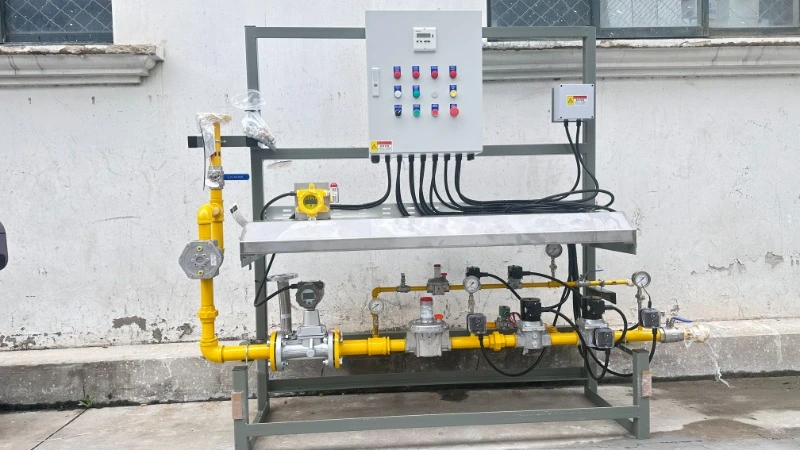
The project required a natural gas heat source for the hot-air drying stage of an automotive coating production line in Tianjin, China. The resulting automotive E-Coating drying combustion system was prepared as a complete customized combustion system that brings the burner, gas train, piping and controls together in one package.
The burner used inside the system is a Honeywell OPLE30. The complete package should be identified as the HEATFLAM Customized Combustion System, because the project scope extends beyond the burner itself to system integration and field support.
| Project item | Confirmed configuration |
|---|---|
| Application | Automotive E-Coating hot-air drying |
| Destination | Tianjin, China |
| Burner inside the system | Honeywell OPLE30 |
| Maximum burner rating | 698 kW |
| Fuel | Natural gas |
| Gas inlet pressure | 300–500 mbar |
| Power supply | 220 V / 50 Hz / 3 phase |
| Natural gas net calorific value | 35.6 MJ/Nm³ |
| Field support | On-site commissioning, combustion tuning and start-up support after delivery |
Why Does Automotive E-Coating Drying Need an Engineered Combustion Package?
An automotive E-Coating drying process is part of a larger production line. The heating equipment must therefore be matched to the oven or hot-air circuit, process temperature, recirculation airflow, production sequence and plant control system. A burner model alone does not define how fuel will be regulated, how operating signals will be handled or how the package will be commissioned at site.
Honeywell’s burner-selection guidance identifies capacity, temperature, process details and turndown among the variables that should be reviewed before selecting a burner. For an automotive coating line heating system, those inputs need to be considered together with the gas supply and control interfaces.
What Is Integrated into This Natural Gas Combustion System?
The visible package combines the principal combustion and fuel-handling elements into one coordinated assembly. Its project configuration includes:
- Honeywell OPLE30 burner: the burner used inside the HEATFLAM system.
- Industrial gas valve train: integrated valves, regulation and pressure-monitoring components for the project gas supply.
- Gas piping: a packaged piping arrangement connecting the fuel train to the burner assembly.
- Control cabinet: the electrical and combustion-control interface prepared for the system.
- System integration: coordinated mechanical and control construction supplied as one engineered package rather than an individual burner shipment.
How Do the 698 kW Rating and 300–500 mbar Gas Pressure Affect Selection?
The maximum burner rating establishes an upper capacity reference for this project configuration. The actual firing demand depends on the calculated process load and operating conditions. Likewise, the stated 300–500 mbar gas inlet pressure is a project input for the configured gas train; it is not a universal inlet-pressure requirement for every e-coating oven burner.
Before quotation, the engineering team should review the available gas pressure and composition, required heat output, oven or hot-air circuit temperatures, airflow, electrical supply, control signals, installation arrangement and the applicable site safety requirements.
What Happens During On-Site Commissioning?
After the equipment reaches the site, HEATFLAM’s project scope includes on-site commissioning, combustion tuning and start-up support. The field stage is used to verify the installed interfaces, confirm operating signals and adjust the combustion system under actual site conditions. Final checks and procedures must follow the approved project documentation, local requirements and the responsibilities agreed with the coating-line integrator and end user.
What Information Is Needed for a Similar Automotive Paint Drying Project?
When specifying an industrial burner for automotive paint drying, a preliminary technical review should begin with the following information:
- Fuel type, composition and available inlet pressure.
- Required heat output and the basis of the heat-load calculation.
- Drying temperature, airflow and operating cycle.
- Oven, duct or hot-air unit drawings and available installation space.
- Power supply, PLC or line-control interface and required operating signals.
- Site location, applicable code and commissioning requirements.
Frequently Asked Questions
Send your process heat load, fuel conditions, drying temperature, airflow, drawings and control requirements for an engineering review.
REFERENCES AND DATA SOURCES:
- Honeywell — Tips on Selecting a Burner (accessed 2026-08-14).
- HEATFLAM — Industrial Combustion Solutions (accessed 2026-08-14).
- HEATFLAM — Contact and Engineering Proposal Form (accessed 2026-08-14).
