
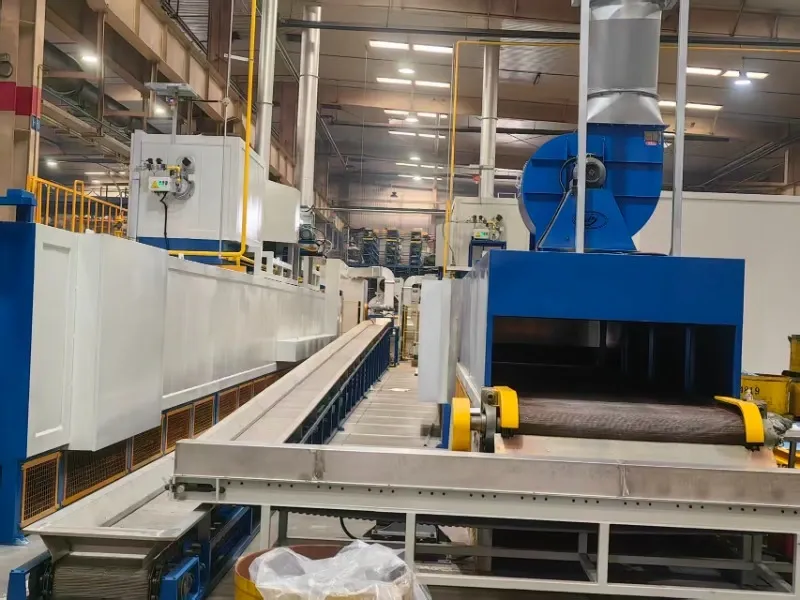
Low NOx Industrial Burner Retrofit: What Factory Buyers Should Know
Root-Cause Diagnosis
Factory buyers should approve a Low NOx Industrial Burner retrofit only when baseline NOx, O2, CO, stack temperature, and firing rate prove that the existing equipment can meet the target. A common tuning reference is 2-3% flue-gas O2 for many natural-gas cases, but CO and flame stability decide the safe limit [1].
Field Troubleshooting Priorities
- Baseline oxygen: If flue-gas O2 is above 3% on natural gas at stable load, measure CO and excess air before assuming the retrofit will save fuel [1].
- Stack loss: If stack temperature changes by 40 F after tuning, compare the expected efficiency effect before accepting the final burner settings [1].
- NOx basis: If the quotation uses mg/Nm3 or ppmvd, require the reference oxygen basis such as 3% O2 where the regulation or permit uses that basis [3].
- FGR fit: If flue-gas recirculation is proposed at 10-20%, confirm fan margin, flame stability, and CO before approving ducting or controls changes [2].
- Safety proof: If controls are modified, verify daily, weekly, semiannual, and annual maintenance checks against OEM, code, insurer, or site procedure [4].
Why Retrofit
A retrofit can target roughly 50-68% NOx reduction in AP-42 factor comparisons for some natural-gas boiler categories when low-NOx burners or flue-gas recirculation are technically suitable [2]. Factory buyers should not approve the project until the supplier states the expected NOx value in ppm or mg/Nm3, the oxygen reference basis, and the test load range.
Retrofitting is most defensible when the pressure vessel, furnace shell, refractory, fan, fuel train, and control cabinet remain serviceable. Full replacement becomes more likely when the old combustion chamber cannot support stable flame shape, when the fan cannot overcome added pressure drop, or when the burner management system cannot meet current safety expectations. For many steam and hot-water boilers, combustion tuning also affects fuel cost: the DOE states that combustion efficiency can improve by about 1 percentage point for every 15 percentage-point reduction in excess air or every 40 F reduction in stack temperature, when comparable conditions are maintained [1].
Emission Targets
The first commercial number is not the burner model; it is the required NOx limit, such as 100 mg/Nm3 under the EU Medium Combustion Plant framework for many natural-gas combustion plants above 1 MW and below 50 MW, subject to plant category and date [3]. U.S. and local permits may instead use ppmvd, lb/MMBtu, or another oxygen correction basis, so the buyer must request the exact conversion condition before comparing quotations.
Low NOx Industrial Burner proposals often fail at the comparison stage because one vendor quotes corrected NOx at 3% O2 while another quotes field ppm at a different oxygen level. A responsible bid should state fuel type, heat input, reference oxygen, expected load range, stack test method, and whether the guarantee excludes transient start-up or low-fire operation.
Efficiency Trade-Offs
For many natural-gas burner tuning cases, 2-3% flue-gas O2 is a common starting range, roughly equivalent to about 10-15% excess air, but the safe target depends on CO, draft, burner design, and load stability [1]. Lower oxygen is not automatically better because insufficient air can increase CO, unburned fuel, flame instability, and furnace pressure excursions.
Low-NOx retrofits can change flame temperature, flame length, recirculated gas volume, and fan operating point. A factory should therefore measure baseline stack temperature, O2, CO, NOx, and burner turndown before retrofit design. If stack temperature rises by 40 F after the retrofit, the same DOE rule of thumb suggests roughly 1 percentage point of combustion-efficiency loss unless another improvement offsets it [1].
Equipment Fit
The minimum useful site survey should capture at least nine data groups: rated heat input, actual load profile, fuel pressure, available electrical power, furnace dimensions, draft condition, fan curve, control-panel condition, and existing safety interlocks. A retrofit is easier to justify when at least three stable load points can be tested before and after the work, because fuel savings and emissions compliance can then be measured over comparable windows.
Batch furnaces, dryers, thermal oil heaters, kilns, and package boilers have different constraints. A heat-treatment furnace may value temperature uniformity within a tight process band, while a steam boiler may prioritize O2 trim, turndown, and stack-loss reduction. Buyers should request a written compatibility matrix covering burner throat, register, refractory opening, flame scanner, valve train, purge timing, FGR ducting if used, and commissioning test points.
Controls and Safety
A practical retrofit should document burner turndown, often 10:1 or 12:1 only when the burner, controls, and process can support stable operation across that range [2]. Acceptance should include at least low-, mid-, and high-fire safety and combustion checks, because a high ratio on paper may add commissioning risk if the chamber or process cannot tolerate low-fire instability.
Before Replacing the System
- Application fit: Use retrofit screening for serviceable boilers, furnaces, dryers, thermal oil heaters, or kilns with confirmed fuel, load, draft, chamber, and fan data.
- Limits: Reject catalogue-only claims when baseline NOx, CO, O2, stack temperature, firing rate, and permit basis are not provided.
- Operational risks: Escalate CO increase, flame instability, high stack temperature, fuel-train mismatch, FGR pressure drop, or controls integration gaps.
- Required confirmation: Confirm the OEM manual, local code, permit authority, insurer, site engineer, combustion test, and commissioning report before final acceptance.
Terms That Affect Diagnosis
- Industrial burner: The fired device that mixes fuel and combustion air for a boiler, furnace, kiln, dryer, or thermal oil heater.
- Low-NOx burner: A burner designed to reduce thermal NOx formation through staged mixing, flame shaping, internal recirculation, or related combustion methods.
- FGR: Flue-gas recirculation returns part of the exhaust gas to the combustion process to lower peak flame temperature where the equipment can support it.
- Flue-gas O2: Oxygen measured in the exhaust stream; it helps diagnose excess air but must be interpreted with CO and flame stability.
- NOx basis: NOx may be reported as ppmvd, mg/Nm3, or lb/MMBtu, often corrected to a stated oxygen reference such as 3% O2.
- Turndown ratio: The ratio between maximum and minimum controllable firing rate, valid only when stable combustion and safe controls are maintained.
Verified Troubleshooting Data
| Issue | Condition | Value | Evidence | Action |
|---|---|---|---|---|
| Excess air loss | Comparable boiler conditions | 15 percentage-point excess-air change equals about 1 efficiency point | DOE tip sheet [1] | Measure O2, CO, and load before claiming fuel savings. |
| Stack loss | Comparable boiler conditions | 40 F stack-temperature change equals about 1 efficiency point | DOE tip sheet [1] | Compare before-and-after stack temperature at matched load. |
| NOx control | Some AP-42 natural-gas boiler categories | Roughly 50-68% reduction in factor comparisons | EPA AP-42 [2] | Require site-specific guarantee, oxygen basis, and load range. |
| Regulatory scope | EU medium combustion plant | 1-50 MW framework; limits vary by category | EUR-Lex directive [3] | Ask the permit authority to confirm the applicable limit. |
| Safety maintenance | Boiler controls and fuel system after retrofit | Interval to be confirmed by OEM, code, insurer, and site procedure | National Board guidance [4] | Record interlock and fuel-train safety tests before release. |
Commissioning Evidence
Commissioning should deliver at least five measured values: NOx, CO, O2, stack temperature, and firing rate at low, mid, and high fire where the process allows. The buyer should also request excess-air calculation, draft readings, combustion-air temperature, ambient condition, fuel pressure, fan speed, and the final burner settings.
Acceptance should be tied to the site condition used in the purchase order. For example, a project may pass at 75-100% load but still require separate action if NOx or CO drifts at low fire. A defensible handover package includes before-and-after test sheets, calibrated analyzer records, control parameter backup, safety-interlock test record, operator training notes, and a list of unresolved constraints.
Procurement Questions
A factory buyer should compare at least nine delivered-risk categories, not only burner price: civil work, ductwork, electrical rewiring, downtime, stack testing, permit filing, refractory repair, analyzer rental, and operator training. Each exclusion should be assigned to the plant, supplier, or third-party contractor before the purchase order is released, and unresolved items should be marked “to be confirmed.”
The strongest technical question is simple: “What measured baseline proves this Low NOx Industrial Burner retrofit will meet our permit and production target?” A supplier that can answer with load points, oxygen basis, CO limit, fan margin, safety test plan, and commissioning records is easier to evaluate than one that only provides catalogue NOx claims.
Frequently Asked Questions (FAQ)
REFERENCES AND DATA SOURCES:
- U.S. Department of Energy, “Improve Your Boiler’s Combustion Efficiency,” Steam Tip Sheet, states practical combustion-efficiency rules for excess air and stack temperature.
- U.S. Environmental Protection Agency, “AP-42 Chapter 1.4: Natural Gas Combustion,” official PDF, used because the EPA chapter is distributed as a technical file and supports natural-gas combustion NOx formation and control-method discussion.
- EUR-Lex, “Directive (EU) 2015/2193 on the limitation of emissions of certain pollutants into the air from medium combustion plants,” official regulation page, defines the EU framework for 1-50 MW medium combustion plant emission limits.
- National Board of Boiler and Pressure Vessel Inspectors, “Suggested Maintenance Log Program,” public maintenance guidance, lists daily, weekly, semiannual, and annual boiler control and fuel-system checks.