
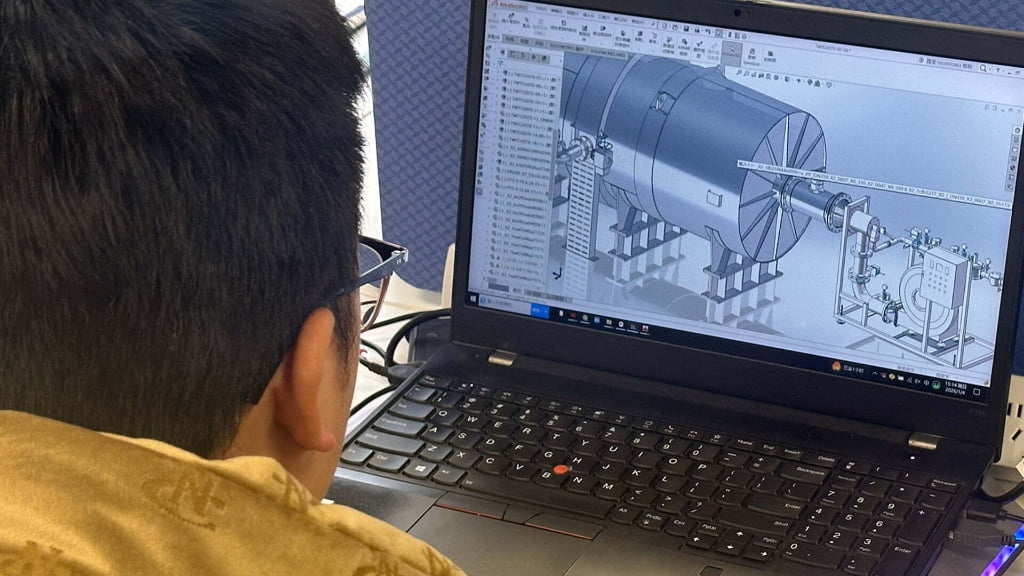
About Heatflam: Customized Industrial Combustion Solutions and Burner System Engineering
Root-Cause Diagnosis
Customers choose Heatflam for customized industrial combustion solutions when the root cause is not just burner capacity but air ratio, fuel pressure, NOx basis, safety logic, or retrofit space. A defensible diagnosis starts with load, fuel, O2 or CO2, CO, stack temperature, and site limits, because excess air and stack temperature directly affect efficiency [3].
Field Troubleshooting Priorities
- If fuel use is high: compare excess air against the DOE-backed 10% attainable level for well-designed natural-gas systems before accepting a burner-only quote [3].
- If stack loss is high: test whether a 40 F stack-temperature reduction is realistic under the same load before projecting about 1 percentage point efficiency gain [3].
- If NOx is the constraint: treat EPA’s observed 40% to 85% low NOx burner reduction range as a design reference, not a guarantee, until fuel, oxygen basis, permit, and test method are confirmed [4].
- If the plant is 1 MW to under 50 MW in the EU: verify whether the medium combustion plant permit or registration framework applies before final equipment approval [5].
- If safety reliability is questioned: require flame signal, flame-failure cutoff timing, shutoff valve closing, and annual combustion-test records before restart acceptance [6].
Why Customers Choose Heatflam
Heatflam supports industrial heating projects from 30 kW to 80 MW, which matters when one engineering team must discuss small process heaters and large factory heat systems under the same technical workflow [1]. Our combustion solution process starts with fuel availability, target NOx emissions, and thermal load, which is the right starting point for customized industrial combustion solutions rather than catalog-only burner replacement [1].
Customers usually contact us because the current system has a measurable fault: flue-gas oxygen is too high, CO risk appears when excess air is reduced, stack temperature is wasting heat, NOx is close to a permit limit, or the burner cannot follow a changing production load. A standard burner quotation may answer the capacity question, but it rarely answers why the process is unstable.
Measured Air First
On well-designed natural-gas boiler systems, the U.S. Department of Energy-backed OSTI record states that 10% excess air is attainable, and that boiler efficiency may improve by about 1 percentage point for each 15 percentage-point reduction in excess air or 40 F reduction in stack-gas temperature [3]. That is why a credible combustion proposal should include flue-gas oxygen, stack temperature, CO, and load data before recommending hardware [3].
Factories do not buy a customized system only to install new equipment; they buy a controlled path to lower avoidable fuel loss without creating flame instability. Too much excess air carries heat up the stack and lowers efficiency. Too little excess air can create unburned fuel, soot, smoke, and carbon monoxide. The useful target is therefore not lowest oxygen, but the site-specific point where combustion is complete, stable, and efficient.
NOx And Compliance
EPA AP-42’s natural-gas combustion chapter states that low NOx burners have observed NOx reductions of 40% to 85% versus uncontrolled levels, while actual performance depends on burner type, boiler design, firing conditions, and controls [4]. EU Directive 2015/2193 covers medium combustion plants from 1 MW to less than 50 MW and requires permit or registration plus monitoring for regulated pollutants [5].
NOx is a buyer’s risk issue, not just an environmental line item. A plant may need low NOx burners, staged combustion, flue-gas recirculation, O2 trim, or controls upgrades because its current permit basis, oxygen reference, fuel, and process load no longer match the installed system. Heatflam creates the most value when the project is framed as compliance and combustion stability rather than a simple burner model swap.
Skid Retrofit Value
Heatflam skid-mounted system solutions are designed to reduce installation time by 40% compared with traditional on-site assembly, and our built-to-order valve train systems are pre-tested for leakages and safety protocols before shipping [1]. This matters for retrofit buyers because downtime, pipework congestion, and on-site rework are often larger commercial risks than burner price [1].
A skid is not automatically the right answer for every plant, but it can reduce uncertainty when the project involves gas trains, dual-fuel manifolds, shutoff valves, BMS integration, and space-limited installations. The buyer should ask for a P&ID, control sequence, footprint drawing, fuel pressure requirement, valve proofing logic, and commissioning checklist.
Before Replacing the System
- Application fit: confirm equipment type, process temperature, fuel, thermal load, and whether the Heatflam product category covers a burner, skid, hot air furnace, or full customized combustion system [2].
- Limits: mark NOx permit value, oxygen basis, CO limit, furnace pressure, and OEM restrictions as to be confirmed unless the site documents are supplied.
- Operational risks: do not reduce excess air blindly because inadequate excess air can cause unburned combustibles, soot, smoke, and carbon monoxide [3].
- Required confirmation: require OEM manual review, local code or permit review, insurer input where applicable, and combustion-test records before final acceptance.
Terms That Affect Diagnosis
- Industrial burner: the heat-release device must match fuel, air supply, furnace geometry, flame shape, and load range, not only rated capacity.
- Fuel train: valves, regulators, shutoff devices, pressure switches, and proofing logic determine whether the burner can operate safely under site conditions.
- Excess air: the air supplied beyond theoretical combustion demand; too much reduces efficiency, while too little can create CO and unburned fuel [3].
- Low NOx burner: a staged combustion design route that may reduce NOx, but final performance depends on equipment and firing conditions [4].
- Burner management system: the control layer that supervises purge, ignition, flame detection, shutdown, and interlocks; it must be checked against the site safety philosophy.
- Commissioning data: the field record that proves low-fire stability, high-fire capacity, combustion readings, and safety-device operation under stated site conditions.
Verified Troubleshooting Data
| Issue | Condition | Value | Evidence | Action |
|---|---|---|---|---|
| High excess air | Well-designed natural-gas boiler | 10% attainable excess air | DOE/OSTI combustion efficiency record [3] | Measure O2 or CO2 and CO at low and high fire. |
| Fuel efficiency loss | Comparable boiler operating conditions | About 1% efficiency gain per 15% excess-air reduction or 40 F stack-temperature reduction | DOE/OSTI rule of thumb [3] | Confirm stack temperature trend before projecting savings. |
| NOx reduction target | Natural-gas combustion with low NOx burners | Observed 40% to 85% reduction versus uncontrolled levels | EPA AP-42 natural gas combustion chapter [4] | Request permit basis and commissioning test method. |
| EU medium plant scope | Combustion plant in EU framework | 1 MW to less than 50 MW | Directive (EU) 2015/2193 [5] | Check local permit or registration before purchase. |
| Retrofit downtime | Heatflam skid-mounted solution claim | 40% reduced installation time | Heatflam homepage [1] | Ask for skid layout, P&ID, and site installation boundary. |
Engineering Evidence
A professional combustion package should produce at least 5 field acceptance data points: low-fire stability, high-fire capacity, O2 or CO2 reading, CO reading, and stack-temperature reading under stated load. National Board maintenance guidance also lists flame signal checks, flame failure cutoff timing, shutoff valve closing checks, control and safety-device testing, and annual fuel-burning system adjustment using combustion test instruments [6].
Customers choose Heatflam for burner system engineering when they need those checks connected to design decisions. A furnace with uneven product temperature may need burner velocity and flame geometry review. A dryer with fuel waste may need air-ratio control and exhaust heat balance. A boiler with NOx pressure may need burner staging and combustion test evidence.
Buying Checklist
- Confirm the operating load range, fuel type, fuel pressure, and required turndown ratio.
- Request flue-gas O2 or CO2, CO, stack temperature, and current NOx data where available.
- Define whether the project goal is fuel efficiency, NOx reduction, production temperature stability, safety upgrade, downtime reduction, or all of them.
- Ask for the P&ID, control sequence, BMS integration plan, valve train specification, and field commissioning plan.
- Mark local permit limits, insurer requirements, OEM restrictions, and site acceptance values as to be confirmed unless the documents are supplied.
Frequently Asked Questions (FAQ)
REFERENCES AND DATA SOURCES:
- Heatflam, “Custom Industrial Burner & Combustion Systems,” company page, documents the 30 kW to 80 MW heating range, skid-mounted system claim, pre-tested leakage and safety protocol note, discovery process, and commissioning support.
- Heatflam, “Products,” product category page, lists customized combustion systems, fuel trains and skids, hot air furnaces, industrial burners, and low NOx burner categories.
- U.S. Department of Energy Office of Scientific and Technical Information, “Improve Your Boiler’s Combustion Efficiency,” Steam Energy Tips No. 4, states the role of excess air, flue-gas oxygen, stack temperature, attainable 10% excess air on well-designed natural-gas systems, and the 1% efficiency rule of thumb.
- U.S. Environmental Protection Agency, “AP-42: Compilation of Air Emissions Factors from Stationary Sources,” including Chapter 1.4 Natural Gas Combustion, supports NOx formation and reported low NOx burner reduction ranges.
- European Union, “Directive (EU) 2015/2193 on the limitation of emissions of certain pollutants into the air from medium combustion plants,” EUR-Lex legal text, defines the 1 MW to less than 50 MW scope and permit or registration framework.
- The National Board of Boiler and Pressure Vessel Inspectors, “Boiler Maintenance,” public guidance, lists burner, flame safeguard, shutoff valve, control, safety-device, inspection, and combustion-test maintenance checks.