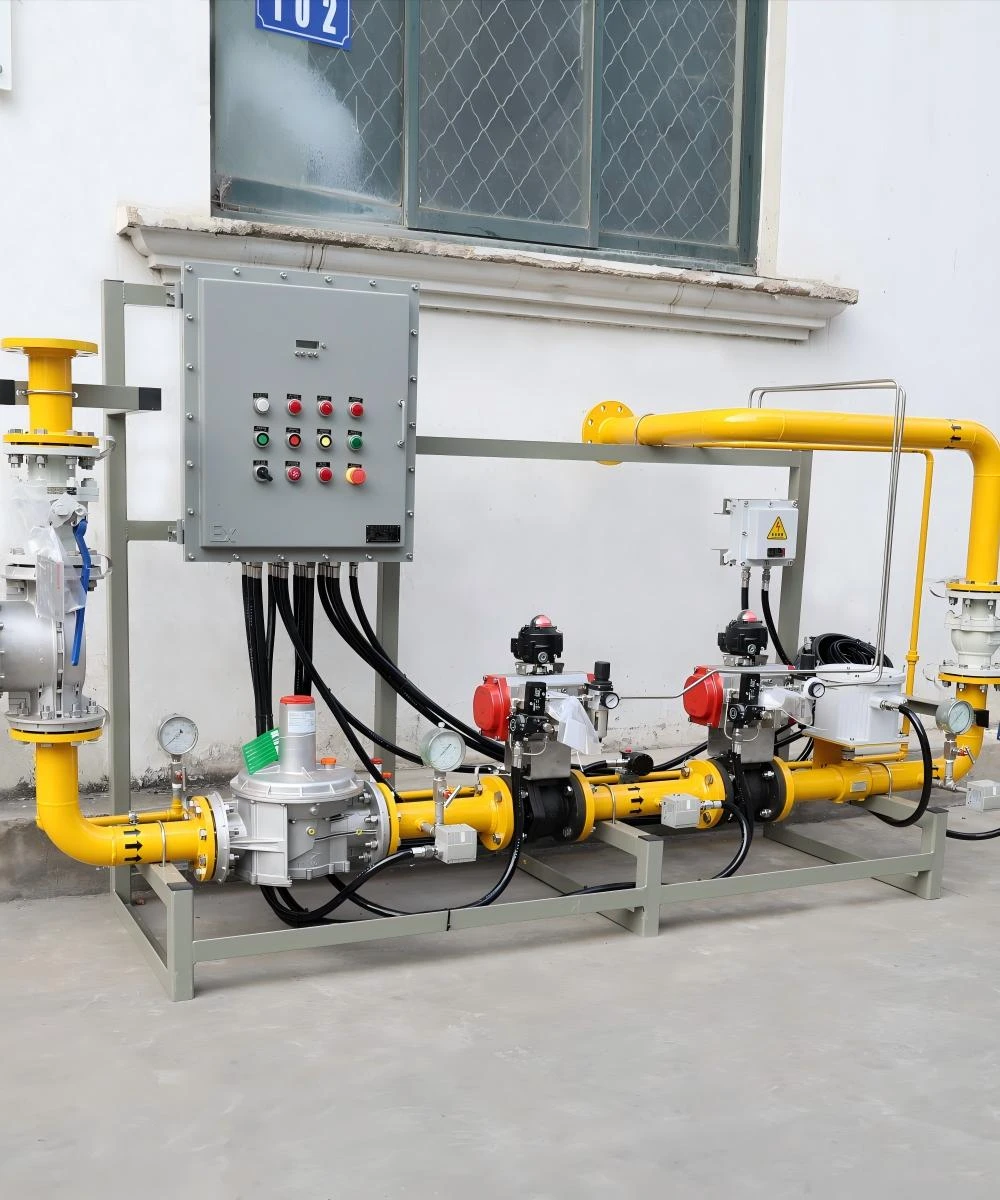
Choosing a process heating burner is a system-engineering decision. A burner can have enough nameplate capacity and still be a poor match if its flame is too long, the available gas pressure is outside its operating range, its minimum firing rate is too high, or the valve train and burner management system do not meet the applicable safety requirements.
This burner selection guide explains eight factors that should be defined before an industrial gas burner, oil burner, or dual-fuel burner is specified. It also provides a practical first-pass approach to burner capacity calculation. Final selection, however, requires a heat balance, combustion-system review, and confirmation against the supplier’s performance data.
Before You Choose: Treat the Burner as Part of a System
The burner, combustion air fan, fuel train, igniter, flame safeguard, process controls, furnace or duct, and exhaust path influence one another. The U.S. Department of Energy’s process-heating resources use energy-balance tools to identify where heat is consumed and lost in furnaces, ovens, dryers, heaters, kilns, and related equipment. This system view is the right starting point for industrial burner selection.
| Burner category | Typical selection question | What must be verified |
|---|---|---|
| Industrial gas burner | Can the available gas composition, pressure, and flow support the required firing range? | Fuel analysis, heating value basis, inlet pressure under full load, valve-train pressure drop, emissions, and code requirements. |
| Oil burner | Can the fuel be atomized reliably through the required load range? | Viscosity at the burner, preheating, filtration, atomizing medium, return system, ignition, and particulate/NOx obligations. |
| Dual-fuel burner | Must the process switch fuels without losing production? | Capacity, flame geometry, emissions, controls, and safety sequence on each fuel and during permitted changeover conditions. |
| Premix or nozzle-mix configuration | Which mixing method fits the process, firing range, and flame requirement? | Flashback resistance, stability, air/fuel control, mounting, furnace pressure, and supplier test data. |
1. Define the Heating Process and Heat-Transfer Objective
Start with what the process must accomplish. Heating a clean-air stream, drying a moisture-bearing product, firing a kiln, heating a thermal fluid, and maintaining furnace temperature are different duties. Specify whether combustion products may contact the material directly or whether an indirect heat exchanger is required. Record the normal and maximum process temperature, production rate, start-up time, batch or continuous operation, allowable temperature variation, furnace pressure, and any sensitive or hazardous process atmosphere.
This step determines more than capacity. It shapes the choice between direct and indirect firing, the number and position of burners, recirculation strategy, materials of construction, and the required control response. For complex plants, a customized combustion-system review is more useful than selecting an isolated component.
2. Confirm the Fuel and Real Supply Conditions
“Natural gas” or “fuel oil” is not a complete fuel specification. For gaseous fuels, obtain the composition or declared heating value, specific gravity where required by the supplier, minimum and maximum supply pressure, pressure variation, temperature, and available flow. Clarify whether the heating value is higher or lower heating value and whether gas volume is stated at standard, normal, or actual conditions. For liquid fuels, include grade, density, viscosity-versus-temperature data, contaminants, required filtration, available pressure, and the proposed atomizing method.
A burner and valve train must be checked at the worst credible supply condition, including pressure loss through regulators, valves, filters, meters, and piping at maximum flow. If future fuel switching is possible, state it during selection. Do not assume that a burner rated for one fuel is automatically suitable for another without manufacturer approval and a system-level safety review.
3. Perform a Burner Capacity Calculation
A useful first-pass calculation separates the heat absorbed by the product or process stream from system losses. For sensible heating without phase change:
Estimated burner input: Qinput = (Quseful + Qother loads + Qlosses) ÷ ηsystem
Use consistent units. In SI, mass flow may be in kg/s, specific heat in kJ/(kg·K), and temperature difference in K, giving kW. Add latent heat for evaporation or melting, heat absorbed by fixtures or conveyors, exhaust and infiltration losses, wall and opening losses, and start-up heat storage. The efficiency term must represent the relevant system boundary, not an assumed burner efficiency copied from an unrelated installation.
Convert required heat input to fuel flow only after confirming the heating-value basis:
The selected burner’s rated capacity should cover the verified maximum duty under the specified fuel, combustion-air temperature, furnace pressure, altitude, and supply pressure. Any design allowance should be justified by known uncertainty, fouling, ambient extremes, or future duty—not added as an arbitrary oversizing percentage. Excessive oversizing can worsen cycling and low-load control.
4. Check Minimum Fire, Turndown, and Control Response
Maximum capacity answers only half of the burner sizing question. Define the lowest stable heat demand and how quickly the load changes. Turndown is commonly expressed as maximum firing rate divided by minimum stable firing rate, but the usable system turndown may be limited by the burner, fuel train, air fan, ratio-control method, flame detector, furnace pressure, or emissions guarantee.
Ask for the guaranteed operating envelope on the actual fuel and application. Check whether the process needs on/off, high/low, modulating, parallel-positioning, or fully metered cross-limited control. A nominal turndown figure should not be treated as universal: flame stability, oxygen level, emissions, and chamber conditions must remain acceptable throughout the intended range.
5. Match Flame Shape to the Combustion Chamber
A burner’s flame length, diameter, momentum, and heat-release pattern must suit the chamber. An otherwise efficient burner can cause refractory damage, tube or product impingement, local overheating, poor temperature uniformity, or unstable combustion if the flame and furnace geometry are mismatched.
Provide chamber dimensions, burner-port details, wall thickness, burner orientation, distance to the nearest surface or product, furnace pressure range, combustion-air temperature, process-gas velocity, and the location of exhaust or recirculation connections. For retrofits, include photographs and drawings, but verify critical dimensions on site. Multiple smaller burners may sometimes provide better zoning than one large burner; the choice depends on the required heat distribution and control architecture.
6. Set Efficiency and Emissions Requirements Together
Air/fuel ratio affects both energy use and emissions. Too little air can increase carbon monoxide, unburned hydrocarbons, and smoke; too much air carries additional heated gas out of the stack. The U.S. EPA notes that natural-gas combustion emissions vary with burner type, unit size, operating conditions, combustion-chamber temperature, and mixing. This is why a low-NOx label or a single laboratory value is not enough for selection.
Define the regulated pollutants, numerical limits, reference oxygen level, averaging period, test method, fuel, and load points required by the project jurisdiction. Then obtain a supplier guarantee that uses the same basis. Also decide how oxygen, carbon monoxide, fuel use, and exhaust temperature will be measured or trended after commissioning. Low-NOx techniques can affect flame shape, stability, turndown, fan duty, and furnace compatibility, so emissions and process performance must be evaluated together.
7. Define Safety, Codes, and Burner Management
Burner selection must include the combustion and fuel-handling safety system. ISO 13577-2:2023 covers safety requirements for combustion and fuel-handling systems in industrial thermoprocessing equipment, including single- and multiple-burner systems. Its scope includes downstream fuel pipework, combustion-air and flue-gas systems, burners and ignition devices, and functional requirements for safety-related control systems.
The exact governing standard depends on the equipment type, fuel, process, installation country, insurer, and authority having jurisdiction. Identify this before the hardware is frozen. The safety review should address purge, ignition sequence, flame supervision, fuel-pressure and air-flow proving, shutoff valves, leak testing where required, emergency shutdown, loss of utilities, furnace pressure, restart logic, hazardous-area classification, and the required independence or integrity of protective functions.
8. Evaluate Integration, Commissioning, and Lifecycle Support
The lowest burner purchase price may not produce the lowest operating risk or lifecycle cost. Review how the burner interfaces with the existing PLC or DCS, what feedback signals are available, whether the fuel train fits the available space, and how the fan, ductwork, silencer, stack, and utilities will be connected. Confirm electrical supply, control voltage, communication protocol, ambient temperature, dust, washdown, corrosion, vibration, and hazardous-location requirements.
Before purchase, define the documentation and services in scope: drawings, P&ID, cause-and-effect matrix, control narrative, component certificates where applicable, factory testing, site commissioning, combustion tuning, emissions testing, operator training, spare-parts list, and maintenance instructions. Also check local availability of critical spares and the competence required for periodic inspection.
Industrial Burner Selection Checklist for an RFQ
A useful request for quotation should contain enough information for suppliers to evaluate the same duty and boundary conditions.
- Process: application, material or fluid, batch/continuous duty, production rate, inlet and target temperatures, start-up time, and temperature uniformity.
- Heat duty: calculated useful load, other loads and losses, system-efficiency basis, maximum input, minimum input, and any justified design allowance.
- Fuel: type, composition or specification, heating-value basis, pressure and temperature range, available flow, and backup-fuel requirement.
- Equipment: chamber and port dimensions, furnace pressure, air temperature, altitude, direct or indirect firing, recirculation, exhaust arrangement, and layout drawings.
- Performance: firing range, control mode, response requirement, flame envelope, noise limit, emissions basis, and efficiency or fuel-use measurement plan.
- Safety and integration: applicable code and jurisdiction, electrical supply, hazardous-area classification, PLC/DCS interface, shutdown philosophy, documentation, testing, commissioning, and training scope.
A Practical Selection Sequence
- Freeze the process duty and operating cases.
- Complete the heat balance and determine maximum and minimum required input.
- Confirm fuel properties and pressure/flow at the burner system boundary.
- Screen industrial burner types for flame geometry, firing range, emissions, and mounting.
- Define the valve train, combustion air, controls, protective functions, and applicable codes.
- Compare proposals on an identical data sheet and require exceptions to be stated.
- Verify performance through design review, testing, commissioning, and field tuning.
Frequently Asked Questions
Send your fuel specification, heat-load calculation, application, temperature range, chamber drawing, site conditions, emissions basis, and control requirements for an engineering review.
REFERENCES AND DATA SOURCES:
- U.S. Department of Energy — Process Heating Systems (accessed 2026-08-10).
- U.S. Department of Energy — MEASUR (accessed 2026-08-10).
- U.S. Department of Energy — Process Heating Assessment and Survey Tool (PHAST 3.0), International Units User Manual (accessed 2026-08-10).
- U.S. Environmental Protection Agency — AP-42, Fifth Edition, Volume I, Chapter 1: External Combustion Sources (updated 2025-08-28; accessed 2026-08-10).
- International Organization for Standardization — ISO 13577-2:2023, Industrial furnaces and associated processing equipment — Safety — Part 2: Combustion and fuel handling systems (published 2023-12).
- International Organization for Standardization — ISO 13577-1:2016, Industrial furnaces and associated processing equipment — Safety — Part 1: General requirements (published 2016-09; confirmed 2022).
