
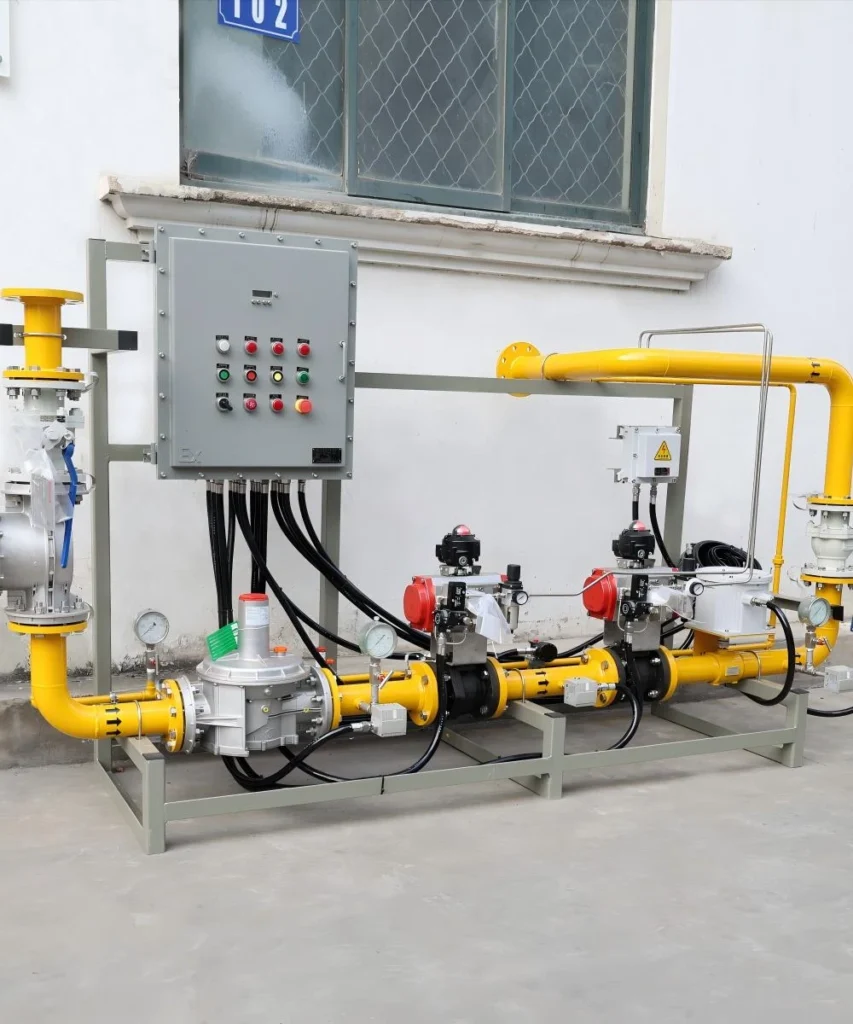
How to Select Burner Spare Parts for Existing Combustion Systems
Root-Cause Diagnosis
Burner spare parts should be selected by matching the failed function, approved sequence, and measured combustion condition, not by appearance alone. For many natural-gas boiler systems, about 10% excess air is attainable, but final acceptance depends on OEM data, code, permit basis, load, fuel, and site test results [1].
Field Troubleshooting Priorities
- If combustion drift is reported: Compare O2, CO or combustibles, and stack temperature because stack temperature and flue-gas O2 or CO2 are primary efficiency indicators [1].
- If excess air is high: Treat each 15 percentage-point excess-air reduction as roughly a 1 percentage-point boiler-efficiency opportunity only when CO and flame stability remain acceptable [1].
- If ignition faults repeat: Verify electrode position and controller timing because some boiler-control guidance limits ignition trial to 15 seconds [5].
- If NOx compliance is sensitive: Recheck the permit and source-test basis because low-NOx burners with FGR are reported at 60% to 90% NOx reduction only in suitable applications [2].
Selection Baseline
A defensible burner spare parts decision starts with 100% match verification against the burner nameplate, controller model, wiring base, flame detector type, fuel, firing rate, and OEM bill of materials. For many natural-gas boiler systems, well-designed combustion can reach about 10% excess air, and every 15 percentage-point excess-air reduction or 40 F stack-temperature reduction can improve boiler efficiency by about 1 percentage point when other conditions are comparable [1].
Do not treat burner replacement parts as generic mechanical items. The same visible electrode, scanner, actuator, or burner controller can have different voltage, timing, flame-detection, purge, or lockout behavior. A safe selection file should include the existing part number, replacement part number, serial number, wiring diagram, fuel type, control voltage, flame detector technology, last combustion report, and the OEM or integrator approval route.
The first purchasing rule is simple: replace function, not just shape. An ignition electrode must match insertion depth, ceramic length, spark gap, connector type, temperature exposure, and mounting geometry. A flame detector must match the flame spectrum and amplifier or burner controller input. A burner controller must match the subbase, sequence, purge card, interlocks, lockout logic, and approved application.
Critical Part Verification
At least 5 checks should be completed before ordering: part number, electrical rating, mechanical fit, combustion function, and safety approval route. Any mismatch in ignition timing, flame detector wiring, or burner controller sequence should be rejected before installation because ignition trials may be limited to 15 seconds in boiler control guidance and failure to ignite must trip the burner safety controls [5].
For an ignition electrode, verify the electrode length against the pilot or main burner drawing, not against the removed part alone. Bent brackets, overheated ceramics, and carbon tracking can make the failed component a poor template. Where the OEM gives a spark gap, set the new electrode to that value; if the value is not supplied, record it as To be confirmed and do not invent a generic gap.
For a flame detector, verify detector family, sighting tube condition, flame signal quality, wiring polarity where applicable, purge-air requirement, and compatibility with the flame safeguard input. Honeywell 7800-series documentation, for example, repeatedly instructs users to follow the flame detector installation instructions for correct wiring, and its relay modules include specific pilot/ignition timing options such as 10-second interrupted pilot/ignition and 15-second variants for selected models [4].
Combustion Checks
Commissioning should compare at least 3 values before and after replacement: flue-gas O2, CO or combustibles, and stack temperature. DOE/NREL states that stack temperature and flue-gas oxygen or carbon dioxide are primary combustion-efficiency indicators, while too little excess air can create carbon monoxide and too much excess air increases stack loss [1].
Use the spare-part change as a reason to re-baseline combustion, especially after replacing an ignition electrode, flame detector, air-pressure switch, actuator, linkage, burner controller, or fuel-train component. A stable flame signal does not prove correct air-fuel ratio. Likewise, a smooth lightoff does not prove acceptable emissions.
For gas-fired boilers, do not assume lower O2 is always better. Lower O2 can reduce stack loss, but if the system crosses the stable-combustion margin it can increase CO, soot, vibration, delayed ignition, flame failure, or nuisance lockout. Acceptance limits depend on burner design, load, fuel composition, chamber pressure, permit basis, local code, insurer requirements, and the commissioning engineer’s test results.
Safety Interlocks
A replacement burner controller or flame safeguard must preserve 100% of required purge, ignition, flame proving, shutdown, and manual reset behavior. U.S. Coast Guard boiler-control guidance requires at least 5 air changes for pre-purge, a purge duration of not less than 15 seconds, proven airflow of at least 25% of full-load volumetric airflow before purge, and ignition trials that do not exceed 15 seconds [5].
Check the interlock chain before blaming the burner controller. Low-fire start switch, high-fire purge proving, combustion-air switch, recirculating-air switch, fuel valve proof, manual valve switch, and preignition interlock faults can all look like controller failure from the operator panel. Replace the controller only after the field devices, wiring, terminal torque, grounding, and flame-signal circuit have been tested.
Emissions Fit
NOx performance should be checked against the site permit or applicable jurisdiction, not against a catalog statement. EPA AP-42 states that low-NOx burners used with flue-gas recirculation can reduce NOx by 60% to 90%, while low-NOx burners alone have shown 40% to 85% NOx reduction relative to uncontrolled levels in natural-gas boiler applications [2].
Those reductions are technology ranges, not a guarantee that burner replacement parts will restore compliance. A new diffuser, gas gun, swirl plate, scanner, actuator, controller, or FGR damper component can change flame shape, flame temperature, recirculation rate, oxygen level, and stability. After any emission-sensitive part replacement, compare the result with the last source test, permit limit, and reference oxygen basis.
For European medium combustion plant contexts, Directive (EU) 2015/2193 applies to 1 MW to 50 MW combustion plants and phases emission-limit obligations by plant size and date, including 2025 and 2030 deadlines for existing plants depending on rated thermal input [3]. If the burner serves an MCPD-regulated boiler or process heater, confirm whether the spare part is only a maintenance item or part of an emission-control retrofit.
Before Replacing the System
- Application fit: Confirm burner type, fuel, load range, firing-rate control, chamber pressure, and whether the part affects ignition, flame detection, air control, or FGR.
- Limits: Do not assume a cross-reference is valid when voltage, sequence timing, flame detector family, purge card, subbase, or emission-control function differs.
- Operational risks: Watch for CO, delayed ignition, flame instability, nuisance lockout, stack-temperature change, NOx drift, and fuel-train safety faults after replacement.
- Required confirmation: Obtain OEM manual support, local code review, permit review, insurer approval when required, and a combustion test or commissioning report before release to service.
Terms That Affect Diagnosis
- Burner spare parts: Replacement components used to restore a burner function, including ignition electrode, flame detector, actuator, valve accessory, linkage, gasket, and burner controller.
- Ignition electrode: The spark component that must match insertion depth, insulation, mounting, connector, and spark location for reliable pilot or main flame lightoff.
- Flame detector: The UV, IR, rectification, or scanner device that proves flame presence to the flame safeguard or burner controller.
- Burner controller: The sequencing device that manages purge, ignition, flame proving, interlocks, firing-rate permissives, shutdown, alarms, and lockout behavior.
- Excess air: Air supplied above stoichiometric demand; too little can cause CO and combustibles, while too much increases stack heat loss [1].
- FGR: Flue-gas recirculation returns part of the flue gas to the burner windbox to reduce flame temperature and NOx formation in suitable designs [2].
Verified Troubleshooting Data
| Issue | Condition | Value | Evidence | Action |
|---|---|---|---|---|
| Excess air drift | Well-designed natural-gas system | About 10% excess air attainable | DOE/NREL combustion efficiency data [1] | Verify O2, CO, stack temperature, and flame stability before accepting adjustment. |
| Efficiency loss | Comparable boiler conditions | 1% efficiency per 15% excess-air reduction or 40 F stack-temperature reduction | DOE/NREL rule of thumb [1] | Compare pre-replacement and post-replacement combustion reports. |
| NOx drift | Natural-gas boilers using low-NOx burner plus FGR | 60% to 90% NOx reduction range | EPA AP-42 control discussion [2] | Request permit basis and source-test comparison after emission-sensitive replacement. |
| Controller mismatch | Selected Honeywell 7800 relay module configurations | 10-second interrupted pilot/ignition; 15-second selected variant | Honeywell installation guide [4] | Verify exact controller model, subbase, timing, and flame detector wiring instructions. |
| Unsafe lightoff | Listed boiler-control context | 5 air changes, not less than 15 seconds purge, 25% airflow before purge, ignition trial not over 15 seconds | U.S. Coast Guard boiler-control procedure [5] | Escalate any part that changes purge, airflow proving, or trial-for-ignition sequence. |
Procurement Checklist
The minimum documented package should contain 8 items: OEM model data, current part number, proposed burner replacement parts, wiring diagram, combustion report, lockout history, permit or safety basis, and commissioning plan. If any of those 8 items is missing, the purchase can still proceed only as a To be confirmed engineering decision, not as a verified like-for-like replacement.
Ask suppliers for written confirmation of interchangeability, not only stock availability. The confirmation should identify the burner model, fuel, voltage, controller family, flame detector family, subbase or mounting interface, required accessories, obsolete-part cross-reference, and whether commissioning is required after installation.
Frequently Asked Questions (FAQ)
REFERENCES AND DATA SOURCES:
- National Renewable Energy Laboratory / U.S. Department of Energy, “Improve Your Boiler’s Combustion Efficiency: Office of Industrial Technologies Steam Energy Tips No. 4,” OSTI program document page, states that optimum excess air improves combustion efficiency, well-designed natural-gas systems can attain about 10% excess air, and boiler efficiency can improve about 1% for each 15% excess-air reduction or 40 F stack-temperature reduction.
- U.S. Environmental Protection Agency, “AP-42, Section 1.4 Natural Gas Combustion,” official PDF technical chapter, used because EPA provides the current public chapter as a PDF; it states that FGR recycles flue gas to the burner windbox, lowers flame temperature and oxygen concentration, and that low-NOx burners with FGR can reduce NOx by 60% to 90% while low-NOx burners alone have shown 40% to 85% reduction in natural-gas boiler applications.
- European Union, “Directive (EU) 2015/2193 on the limitation of emissions of certain pollutants into the air from medium combustion plants,” EUR-Lex legal text, defines the MCPD framework for 1 MW to 50 MW plants and phased emission-limit obligations for existing plants.
- Honeywell, “RM7838B,C 7800 Series Relay Module,” official installation guide PDF, used because the manufacturer provides model-specific wiring and timing details as a PDF; it shows flame detector wiring requirements and selected pilot/ignition timing configurations such as 10-second interrupted pilot/ignition and 15-second model variants.
- U.S. Coast Guard Marine Safety Center, “Boiler Control System,” Procedure E2-22 official PDF, used because the public technical procedure is issued as a PDF; it states pre-purge requirements including at least 5 air changes, not less than 15 seconds purge duration, at least 25% full-load volumetric airflow before purge, and ignition trial not exceeding 15 seconds for the listed boiler-control context.