
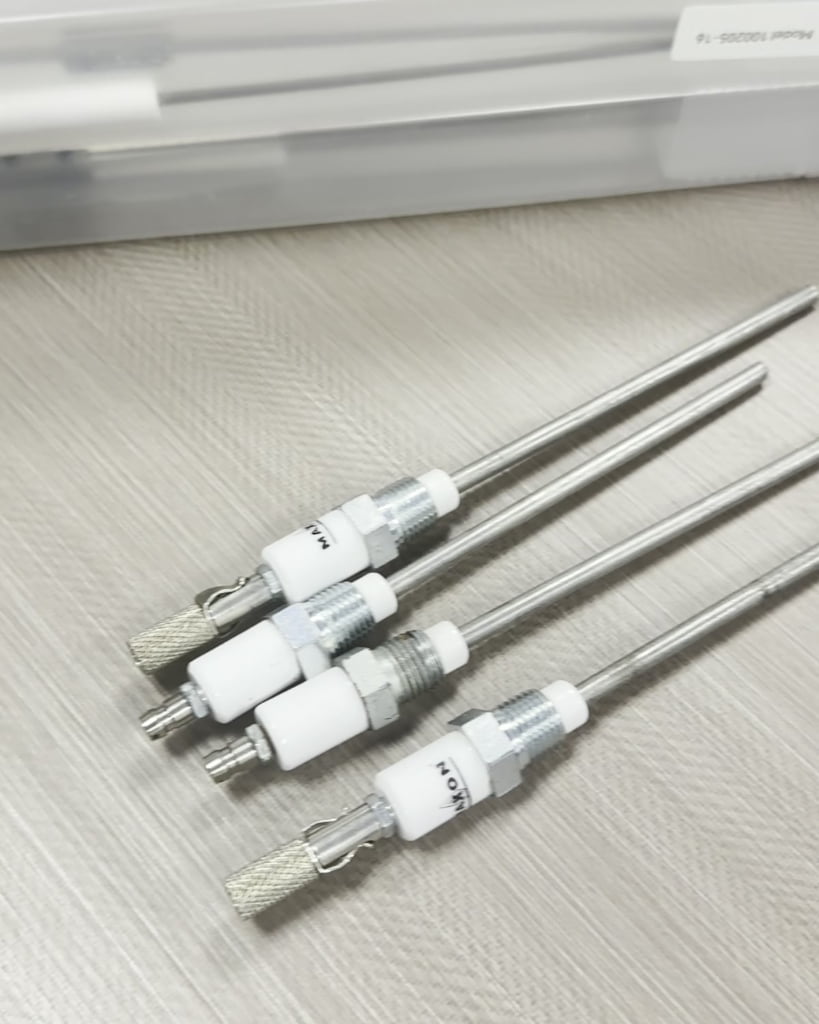
The right industrial burner ignition electrode is the one that fits the burner’s mechanical connection and places the spark or flame-sensing element in the position specified by the burner documentation. Length, thread size, ceramic section, rod diameter, terminal, and control-system arrangement all affect the selection. A similar-looking electrode can still be unsuitable if its insertion depth or electrical arrangement is different.
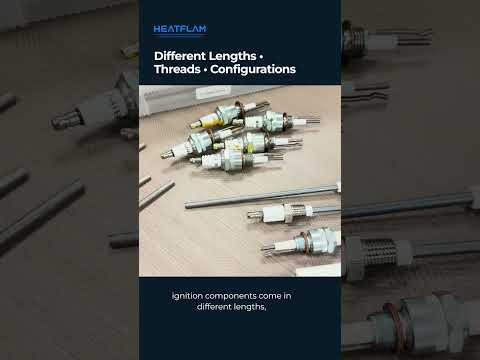
What Does an Industrial Burner Ignition Electrode Do?
A burner ignition electrode creates the ignition spark at the pilot or main burner. Depending on the burner design, a related flame rod or combination electrode can also support flame monitoring. The ignition device works as part of the complete ignition and flame-safety system, which includes the ignition transformer, wiring, burner control, and flame detector. The U.S. Department of Energy describes automatic ignition systems as systems that ignite a pilot or burner and use safety features to shut off gas when ignition fails. [1]
That is why an industrial burner igniter should be selected as a burner-system component, rather than as an isolated ceramic-and-metal spare.
Which Specifications Matter in Ignition Electrode Model Selection?
Start with the burner manual or the original electrode drawing. Record the following dimensions and interfaces before ordering an ignition electrode replacement:
- Overall and insertion length: The electrode must reach the specified ignition or sensing position without contacting the burner body.
- Thread size and connection: Confirm the thread form, nominal size, pitch where relevant, sealing arrangement, and whether a reducing bushing is permitted.
- Rod and ceramic construction: Compare rod diameter, exposed length, ceramic length, insulator condition, and any metal sleeve or shielding.
- Terminal and electrical arrangement: Check the terminal type, cable connection, grounding arrangement, ignition transformer, and whether one electrode is used for ignition and monitoring.
- Burner and fuel context: Confirm the exact burner model, fuel, pilot arrangement, controller, ambient temperature, and installation position.
How Do Ignition Electrode Sizes and Thread Sizes Affect Fit?
Ignition electrode sizes are not interchangeable simply because the rod appears to be the same length. A different thread can prevent correct installation; a bushing can also change the final insertion depth. Eclipse’s flame-safety guidance says to use the length recommended for the burner, avoid contact between the flame electrode and burner parts, and avoid adaptors that alter the required insertion length. [2]
Manufacturer catalogues show why a visual match is insufficient: ignition and sensing electrodes can be offered in multiple lengths, rod diameters, terminal arrangements, and insulation configurations. [3] Treat ignition electrode thread size and insertion length as measured selection inputs.
| Check before ordering | What to send or measure |
|---|---|
| Burner identity | Manufacturer, exact burner model, serial or revision if available |
| Existing part | Part number, label, overall length, exposed rod length, thread and terminal |
| Installation | Thread connection, insertion direction, clearance and burner documentation |
| Photos | Full electrode, close-up of thread and terminal, and burner mounting point with a scale |
When Is a Burner Ignition Electrode Replacement Suitable?
A replacement burner part is suitable only after the mechanical, electrical, and operating requirements are checked together. Replace a cracked or chipped insulator, bent rod, damaged terminal, or worn ignition component with a part that matches the burner documentation and installation geometry. Do not assume that a different brand or a similar-looking industrial burner spare part is an equivalent substitute.
For a cross-brand enquiry, provide the original model and all available dimensions. Heatflam supports industrial combustion solutions, ignition systems, standard combustion components, and replacement enquiries subject to technical confirmation.
How Can Heatflam Help Confirm the Right Model?
Send the burner model, part number, product photos, dimensions, fuel, controller, and installation details. Heatflam can review the information and help identify a suitable ignition electrode, industrial burner igniter, flame rod, or replacement component. Final suitability remains dependent on the burner manufacturer’s documentation and the actual site installation.
Frequently Asked Questions
Send the burner model, part number, dimensions, and product photos. Heatflam will review the information and help confirm a suitable match.
REFERENCES AND DATA SOURCES:
- U.S. Department of Energy — Electric and Mechanical Ignition Systems (accessed 2026-09-09).
- Eclipse — Flame Safety, Ignition Components, Edition 12.20 (published 2021-01-06).
- Kromschröder — FE, FZE Ignition and Sensing Electrodes (technical information, accessed 2026-09-09).
- U.S. Department of Energy — Industrial Combustion Technology Roadmap (accessed 2026-09-09).