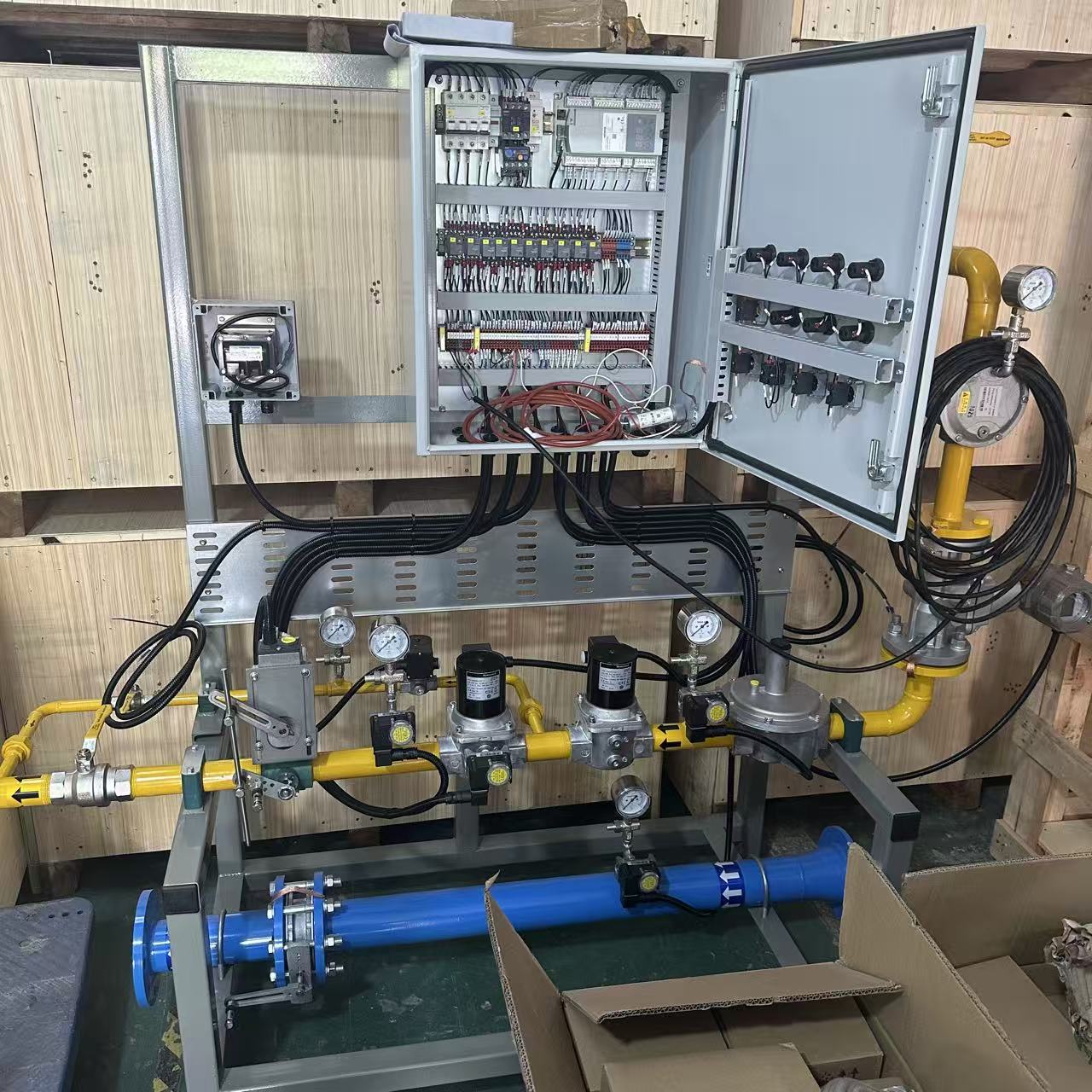
Why Test a Burner System Before Delivery?
An industrial burner package is more than a burner head. It may include a fuel train, ignition equipment, flame detection, a control panel, safety interlocks, actuators, sensors, and wiring interfaces. Each item can be correct on its own while the assembled system still requires verification of its sequence and connections.
Factory testing is a controlled opportunity to review the supplied system before it reaches a boiler room, furnace, kiln, dryer, oven, or process-heating line. By confirming the agreed functions before shipment, the project team can resolve accessible assembly or logic issues earlier and create a clearer baseline for site commissioning.
What Does Factory Testing Usually Cover?
The test scope should be agreed in the purchase specification. Depending on the equipment, available test utilities, and project requirements, it may include the items below.
| Test area | What the review can confirm |
|---|---|
| Visual and assembly inspection | Component identification, piping orientation, accessible service points, panel layout, nameplates, and agreed mechanical interfaces. |
| Electrical inspection | Terminal identification, wiring against drawings, control voltage, grounding provisions, and external signal interfaces within the defined scope. |
| Sequence and logic test | The programmed start, purge, ignition, flame-proving, run, shutdown, lockout, and reset sequence where relevant equipment and test conditions are available. |
| Safety-interlock simulation | The expected fuel shutoff or lockout response when selected conditions such as flame failure, air-pressure loss, or out-of-range fuel pressure are simulated. |
| Documentation review | Test records, wiring diagrams, component lists, manuals, and open-item records required by the agreed handover package. |
Why Safety-Function Testing Deserves Special Attention
A burner-management system is designed to permit fuel only when the defined firing conditions are satisfied. Public guidance and specifications for industrial combustion equipment commonly call for verification of flame-safeguard functions, fuel safety shutoff operation, combustion-air proving, and other safety interlocks.
Testing these functions before delivery makes it easier to verify the intended logic while the control panel, fuel train, and drawings are readily accessible. It also helps document what was tested, what conditions were simulated, and what remains to be verified at the final installation.
- Flame safeguard: confirm the intended trip response when flame is not proven or is lost during operation.
- Fuel safety shutoff: confirm that safety valves receive the correct shutdown command within the approved control sequence.
- Combustion-air proving: confirm the response to the selected air-flow or air-pressure interlock condition.
- Fuel-pressure supervision: confirm the expected response when high- or low-pressure switch conditions are simulated, where included in the design.
- Reset and lockout: confirm that a safety trip is handled according to the approved reset procedure rather than being bypassed.
Factory Testing vs. Site Commissioning
These stages are complementary. Factory testing focuses on the supplied package and agreed acceptance scope. Site commissioning confirms that the package performs correctly when connected to the actual burner application, utilities, process equipment, and operating environment.
For example, a factory test may verify control-panel sequencing and a simulated air-pressure trip. Site commissioning must still confirm the real combustion-air proving conditions, actual fuel pressure, proper purge requirements, flame stability, emissions performance where applicable, and communication with plant controls.
How to Specify a Useful Factory Acceptance Test
The most useful factory acceptance test is specific. Rather than requesting only “test before delivery,” define the equipment, acceptance criteria, witness requirements, documentation, and any limitations caused by unavailable utilities or process equipment.
- List the burner, valve train, controls, sensors, actuators, and interfaces included in the test.
- Define which interlocks must be functionally tested and which can only be simulated.
- State whether live firing is required, permitted, and supported by the available fuel and test arrangement.
- Request a signed test record, wiring drawings, component identification, and a list of exceptions or open items.
- Separate factory-test acceptance from final site commissioning and local approval responsibilities.
For a project involving burner selection, valve-train design, controls, and testing requirements, Heatflam can support customized industrial combustion-system integration based on the confirmed fuel, process conditions, control requirements, and delivery scope.
Frequently Asked Questions
Send the burner model, fuel, capacity, controls, required interlocks, and requested test documents for a project-specific review.
REFERENCES AND DATA SOURCES:
- U.S. Occupational Safety and Health Administration, Technical Manual. Referenced for the need for unit-specific startup and emergency procedures, including purging before light-off and after misfire or loss of flame; accessed July 28, 2026.
- Hawaii Occupational Safety and Health Division, Boiler Rules. Referenced for examples of testing burner flame safeguards, fuel valves, purge-air switches, and pressure interlocks in accordance with manufacturer instructions; accessed July 28, 2026.
- U.S. Occupational Safety and Health Administration, Burner Management System Citation Detail. Referenced for the importance of meeting applicable design specifications and verifying flame-failure safety response; accessed July 28, 2026.
