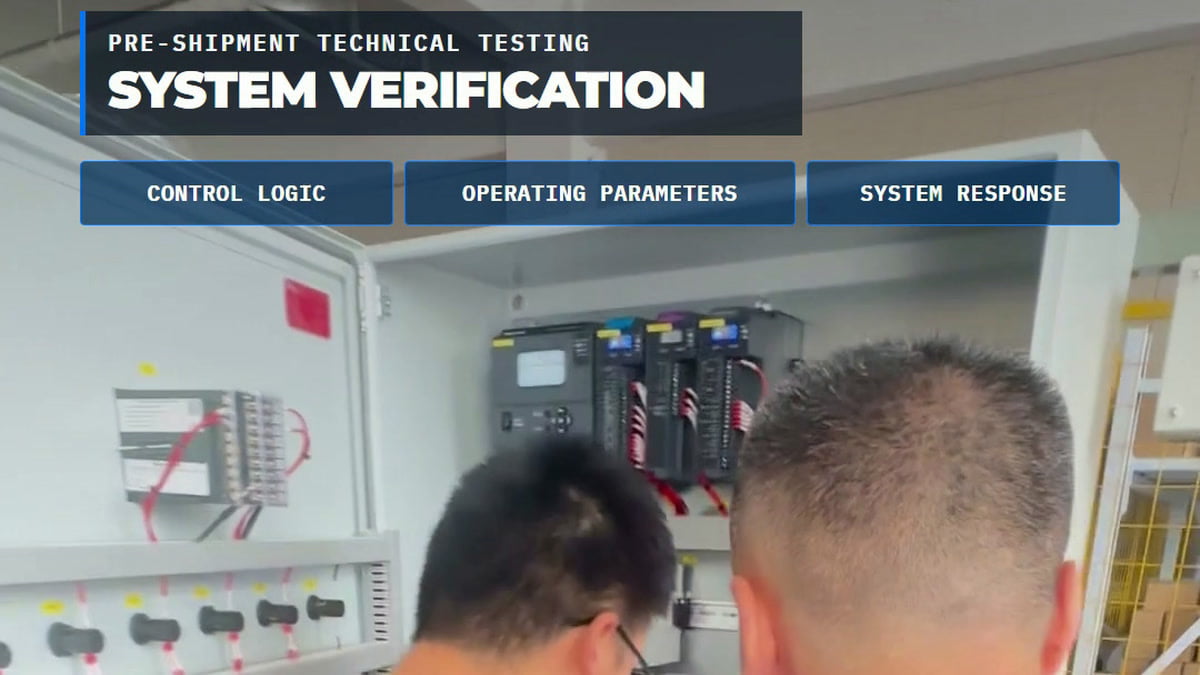
Project video: pre-shipment technical testing before delivery to Spain.
Project Snapshot: 14,000,000 kcal/h System for Spain
This project is a customized industrial combustion system for gypsum powder drying. The workshop footage records two senior engineers working together before shipment rather than a staged product demonstration. Their task is to verify that the system is prepared for installation and for the next phase of engineering work at the customer’s site.
| Application | Gypsum powder drying |
| Specified heat output | 14,000,000 kcal/h |
| Destination | Spain |
| Pre-shipment team | Two senior engineers |
| Workshop scope shown | Control logic, operating parameters, and system response verification |
| Planned site support | On-site commissioning and final tuning in Spain |
What Is a Gypsum Drying Combustion System?
A gypsum drying combustion system is the engineered heat source and control package that supplies the thermal energy required by an industrial dryer. It is not selected by heat output alone. The burner or combustion equipment, air and fuel trains, control panel, safety interlocks, process signals, and the dryer’s airflow arrangement must work as one system.
The U.S. Department of Energy describes industrial process heating as a system-level activity involving fuel combustion, heat transfer, heat containment, and controls. That is a useful design perspective for a combustion system for an industrial dryer: stable process heat depends on the interaction between these elements, not only the burner nameplate. The DOE also notes that fuel-to-air ratio is an important factor in combustion performance.[1]
Gypsum processing routes vary by plant. The U.S. Environmental Protection Agency’s process description includes drying, grinding, and calcining operations and notes that not every gypsum plant uses the same sequence or equipment. It also describes hot combustion gases being used in several gypsum-processing arrangements.[2] For this Spain project, the confirmed application is gypsum powder drying; the customer’s dryer type, production capacity, moisture range, and process temperatures have not been disclosed.
Why Pre-Shipment Combustion System Testing Matters
Pre-shipment combustion system testing creates a controlled checkpoint before equipment leaves the workshop. It gives engineers an opportunity to review the control sequence and confirm that the assembled control package responds as intended before site conditions are introduced.
For this project, the video documents engineers working on three confirmed areas:
- Control logic: reviewing how the system’s programmed sequence and commands operate.
- Operating parameters: checking the configured values available through the control interface.
- System response: observing how the equipment reacts while adjustments and verification steps are carried out.
This is a functional engineering stage, but it is not a substitute for site commissioning. Workshop conditions cannot reproduce every field variable, including the final fuel supply, electrical interfaces, duct resistance, dryer airflow, and the customer’s process load. No numerical test results, efficiency figures, emissions values, or performance guarantees are presented in this case record.
What the Two Senior Engineers Were Checking
The visible work includes joint inspection of the control cabinet, operation of a computer-based control interface, parameter adjustment, and confirmation between the two engineers. Using two experienced engineers also provides a practical cross-check when the control sequence and equipment response are reviewed together.
A combustion control system links the heat source to the industrial process. Depending on the final project configuration, this normally requires coordinated logic for start-up permission, operating commands, process feedback, shutdown, and fault handling. The footage confirms that control logic, operating parameters, and system response were being verified; it does not provide enough evidence to publish the exact interlock list, component brands, fuel type, or control architecture.
How On-Site Commissioning in Spain Completes the Delivery
After delivery, HEATFLAM engineers are scheduled to travel to the customer’s site in Spain for commissioning and final tuning. This phase connects the workshop-tested equipment to the actual gypsum drying system and its operating environment.
Typical site work for an industrial drying combustion system may include confirming field wiring and permissives, checking the available fuel and combustion-air conditions, reviewing airflow or draft, testing the site operating sequence, and tuning the system against the real dryer response. The exact commissioning checklist must follow the approved project documents, equipment configuration, local requirements, and site conditions.
This distinction matters: pre-shipment testing reduces avoidable uncertainty before dispatch, while burner commissioning verifies and adjusts the integrated installation under real conditions. NFPA 86, a widely used standard for ovens and furnaces, separately addresses commissioning, operations, maintenance, safety equipment, and inspection and testing.[3] The reference is provided as general engineering context; it does not state that this Spain project was designed or certified to NFPA 86.
What European Buyers Should Confirm in the Documentation
For equipment entering the European market, buyers should check which EU legislation applies to the specific product and scope of supply. The European Commission states that the manufacturer is responsible for identifying applicable requirements, completing the relevant conformity assessment, preparing technical documentation, issuing an EU Declaration of Conformity where required, and affixing the CE marking when the applicable rules have been met.[4]
The precise compliance route depends on the equipment and how it is supplied or integrated. A buyer should therefore request the final declaration, applicable legislation and standards, document holder, model or system scope, and relevant instructions rather than relying on a generic statement. Project-specific certificate details are not published in this case article because the underlying conformity documents have not been provided for review.
A Customized Combustion System, Not Only a Burner Shipment
The value of this project lies in the complete engineering chain: define the process duty, configure the combustion and control package, test the system before shipment, deliver it to the site, and continue with commissioning and final tuning. This is the difference between purchasing an isolated component and sourcing a customized combustion system that must operate as part of a larger industrial heating system.
For an overview of HEATFLAM’s engineering scope, see its industrial combustion solutions. The final design for any new gypsum drying system should still be based on that plant’s verified process data and site interfaces.
Information Needed to Specify an Industrial Burner for Gypsum Drying
For a technically useful proposal, an enquiry should include more than a target heat output. The following inputs help engineers define the equipment and integration boundary:
- Dryer type and how combustion gases transfer heat to the process
- Gypsum throughput, inlet moisture, target outlet moisture, and operating schedule
- Required process-air temperature, airflow, and allowable pressure or draft conditions
- Required heat output and expected operating range
- Available fuel, supply pressure, and fuel-quality information
- Site voltage, control signals, plant communication requirements, and safety interface
- Local regulatory, emissions, documentation, and inspection requirements
- Installation responsibilities, commissioning scope, operator training, and project schedule
These inputs allow an engineering team to evaluate the complete gypsum drying combustion system instead of sizing an industrial burner from a single number. They also create a clearer basis for factory testing, site acceptance, and final tuning.
Frequently Asked Questions
Discuss Your Gypsum Drying Project
Send your process data, required heat output, fuel and pressure, dryer configuration, temperatures, electrical supply, control interface, site conditions, and commissioning requirements. HEATFLAM can review the engineering scope for your industrial drying combustion system.
REFERENCES AND DATA SOURCES:
- U.S. Department of Energy — Improving Process Heating System Performance: A Sourcebook for Industry, Second Edition (accessed 2026-08-21).
- U.S. Environmental Protection Agency — AP-42, Section 11.16: Gypsum Manufacturing (published July 1993; reformatted January 1995).
- National Fire Protection Association — NFPA 86: Standard for Ovens and Furnaces (2023 edition).
- European Commission — CE Marking: Manufacturers (accessed 2026-08-21).
