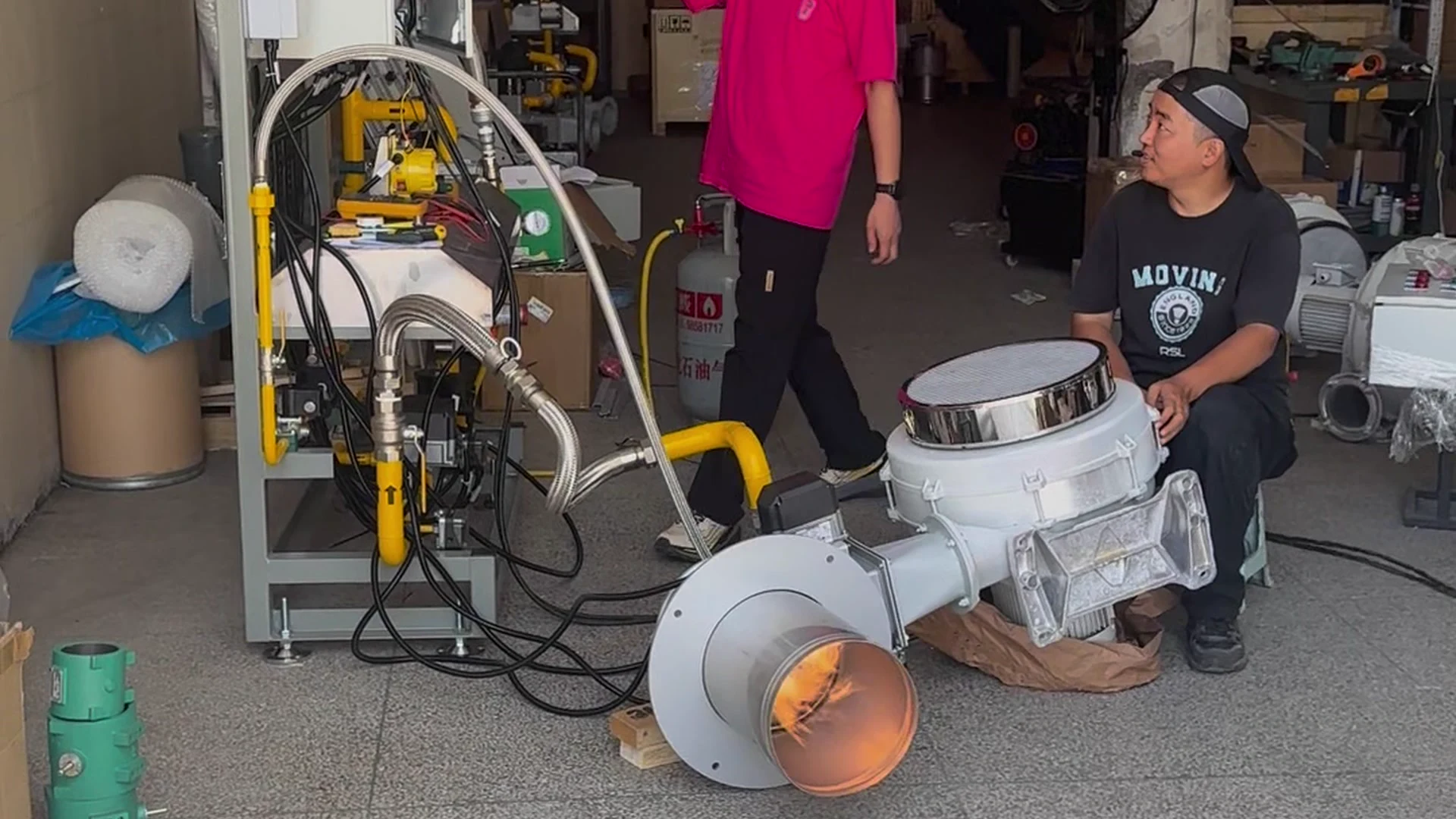
A natural-gas combustion system for automotive clear-coat drying
Clear-coat drying is a process-critical step in automotive painting. The combustion system must be selected around the required thermal duty, available fuel, process conditions, control requirements, installation constraints, and the commissioning plan. For this Thailand project, Heatflam engineered three natural-gas combustion systems for an automotive painting plant’s clear-coat drying application.
The project is an example of customized industrial combustion system integration: the burner-side equipment, gas supply and valve-train arrangement, ignition sequence, and combustion controls are considered as one engineered system rather than as isolated parts.
| Project parameter | Confirmed project information |
|---|---|
| Application | Automotive clear-coat drying |
| Location | Thailand |
| Fuel | Natural gas |
| Quantity | Three systems |
| Rated capacity | 600,000 kcal/h per system |
| Current test stage | Factory initial ignition and commissioning checks |
| Next stage | On-site secondary commissioning after installation |
What the factory video shows
The recorded sequence shows a pre-delivery review of the system, including the control cabinet, operating controls, internal cabinet components, and the initial ignition test. These checks help the engineering team observe the operating sequence and establish the initial combustion state before shipment and site work.
- Control inspection: review of the cabinet and visible control elements before initial firing.
- Initial ignition: a real start-up sequence, not a simulated demonstration.
- Commissioning path: factory checks first, followed by secondary commissioning after the equipment is installed.
Why secondary commissioning matters after installation
Factory commissioning is an important preparation stage, but it is not the same as final process verification at the customer’s plant. After installation, Heatflam engineers plan to conduct secondary commissioning on site. The purpose is to verify combustion performance and operating stability against the customer’s actual process requirements, then make the appropriate combustion-state adjustments within the installed system context.
This staged approach is useful for industrial drying projects because site conditions, connected equipment, and process operation can only be assessed after installation. The video therefore documents the project’s current verified stage, not final acceptance or a completed customer-site result.
Information to prepare for a combustion-system enquiry
For a clear-coat drying, oven, hot-air heating, or other industrial thermal-process project, share the following information with the engineering team:
- Fuel type and available gas pressure
- Required thermal duty and process temperature range
- Dryer, oven, duct, or hot-air-system layout and available installation space
- Electrical supply, control-interface requirements, and required commissioning scope
- Applicable local requirements and the process acceptance criteria to be verified on site
Frequently Asked Questions
Send your fuel, capacity, process, layout, control, and commissioning requirements for a customized engineering discussion.
REFERENCES AND DATA SOURCES:
- Project facts, test-stage description, and video supplied by Heatflam for this page.
- Heatflam Solutions, accessed 2026-07-24.
