
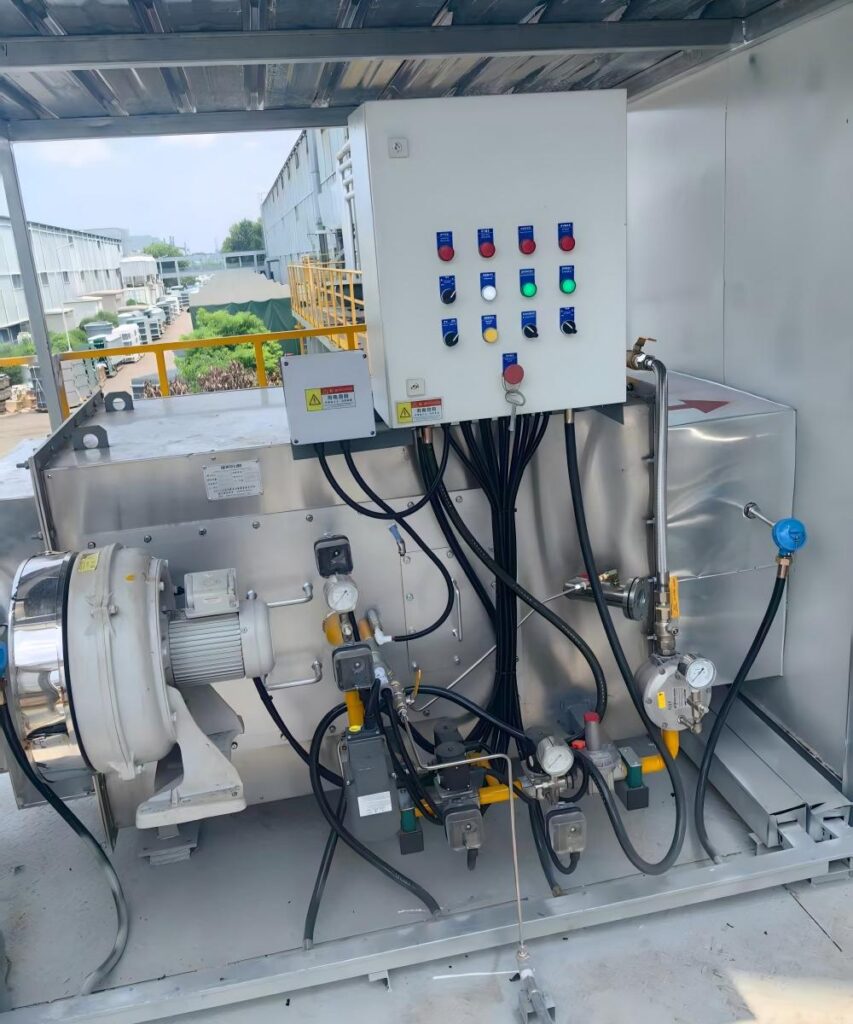
Key Technical Factors When Evaluating Natural Gas Burners for Industrial Use
Choosing optimal natural gas burners for industrial use necessitates a critical analysis of thermal load, fuel gas pressure stability, and turndown capabilities to ensure system efficiency across variable process demands. The selection process is an exercise in engineering precision, where the burner must not only provide the required British Thermal Units (BTUs) but also maintain flame geometry and stoichiometric accuracy throughout its entire firing range.
- Turndown Ratio Dynamics: High turndown ratios, such as 10:1 or 12:1 [1], are essential for processes with significant load fluctuations. This prevents frequent on/off cycles and the associated purge losses.
- Gas Train Engineering: Evaluating whether to use Zero Governor systems for premix applications or Ratio Regulators for larger diffusion burners determines the stoichiometric accuracy of the fuel-air mixture.
- Material Selection: Burner heads must utilize high-grade alloys like Inconel or silicon-carbide (SiC) ceramics to resist oxidation and thermal deformation in continuous high-temperature service.
Matching Burner Types to Your Specific Industrial Process
Matching burner architecture to process thermodynamics requires an understanding of flame geometry and heat transfer mechanisms, whether utilizing direct-fired diffusion or high-intensity premix configurations. Each industrial application—from textile drying to steel forging—demands a specific heat signature.
Diffusion (Nozzle-Mix) burners are the workhorse of heavy industry, mixing fuel and air at the point of ignition to prevent flashback. These designs often incorporate “staged” air or fuel injection to suppress Thermal NOx formation, keeping emissions below 30 ppm [2]. For processes where the workpieces must not contact combustion products, radiant tube and self-recuperative designs are employed, improving thermal efficiency by 15% to 25% [3].
| Metric | Industry Standard | High-Performance Target |
|---|---|---|
| Turndown Ratio | 4:1 (Mechanical) | 10:1 to 12:1 [1] |
| NOx Emissions | < 100 mg/Nm³ | < 30 mg/Nm³ [2] |
| Efficiency Gain | Baseline | 15% – 25% [3] |
Finally, the selection of the Burner Management System (BMS) must integrate seamlessly with existing PLC architectures via Modbus or EtherNet/IP. Modern BMS units provide high-resolution “First-Out” fault diagnostics, which can reduce industrial troubleshooting downtime by up to 40% [4].
Frequently Asked Questions (FAQ)
REFERENCES AND DATA SOURCES:
- [1] Industrial Combustion Systems Selection Guide 2026: Turndown and Load Management
- [2] Global Emission Standards for Medium Combustion Plants & EPA Compliance 2025
- [3] Energy Efficiency Trends in Process Heating: The Impact of Recuperative Burners
- [4] BMS Diagnostics and NFPA 86 Standards for Reducing Industrial Downtime