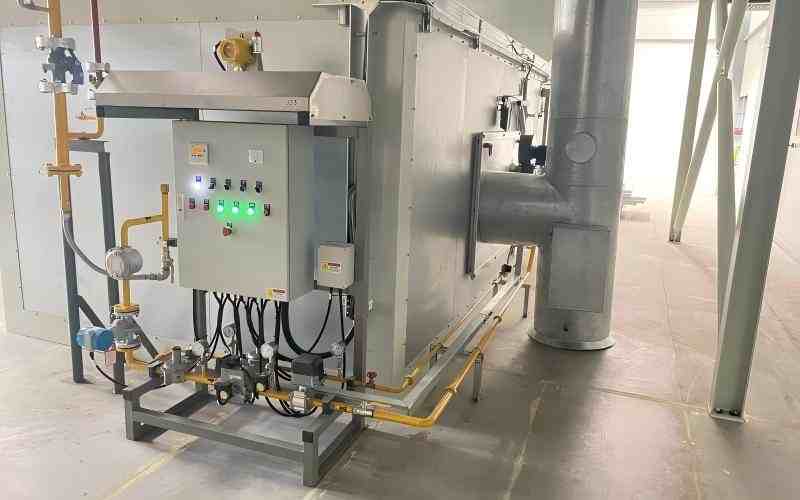
How to Select an Industrial Oven Burner for Optimal Temperature Uniformity in Food and Coating Lines
Choosing the right industrial oven burner is the most critical decision in designing thermal processing systems for food and industrial coatings. Whether you are baking bread or curing automotive powder coatings, a variance of just a few degrees can lead to product spoilage or coating failure. Achieving a temperature uniformity of ±3°C (±5°F) requires a synergy between burner modulation, airflow dynamics, and firing technology.
This guide explores how to evaluate technical specifications and selection criteria to ensure your production line operates with surgical precision.
Why is temperature uniformity the most critical factor for industrial oven burners?
Temperature uniformity ensures consistent chemical and physical reactions across the entire surface of the product, preventing defects like under-curing in coatings or uneven moisture in food. In industrial coating, an “under-baked” section results in poor adhesion and corrosion resistance, while an “over-baked” section can lead to brittle finishes and discoloration.
In the food industry, a high-performance industrial oven burner must eliminate “cold spots” to guarantee pathogen lethality and “hot spots” to prevent acryl-amide formation. Research indicates that maintaining a temperature tolerance within ±2°C is now the gold standard for high-speed industrial bakeries [1]. Achieving this level of precision depends on the burner’s ability to respond to load changes instantly without overshooting the setpoint.
What types of industrial oven burners are best for food processing safety?
Indirect-fired burners are the preferred choice for food processing because they use a heat exchanger to isolate combustion by-products from the food chamber, ensuring zero contamination. By heating the air through a stainless steel exchanger, the food is only exposed to clean, heated air.
High-efficiency indirect systems today can achieve a heat exchange efficiency of up to 92% [2]. When selecting these burners, look for those designed with “low NOx” technology to meet environmental regulations, even if the flue gas doesn’t touch the product. For specific snacks or grains, direct-fired burners can be used if they utilize high-purity natural gas and precise air-to-fuel ratio controls, but the risk of moisture and CO2 absorption must be strictly managed via the burner’s secondary air mix.
How to choose an industrial oven burner for powder coating workshops?
For powder coating, you should prioritize high-velocity convection burners or infrared (IR) burners, depending on the geometry of the parts being cured. While convection burners are excellent for complex 3D shapes because they bathe the part in uniform hot air, gas-catalytic infrared burners provide rapid “surface-first” heating which is ideal for flat panels and prevents the “blowing off” of powder before it gels.
The critical metric for coating applications is the “Turndown Ratio.” An industrial oven burner with a 40:1 turndown ratio allows the system to maintain a stable flame even at very low heat outputs [3]. This prevents the “cycling” effect (turning the burner fully on and off), which is the primary cause of temperature spikes that ruin high-gloss finishes.
What technical specifications ensure +/- 5°F uniformity in an oven?
To maintain a strict ±5°F (±3°C) uniformity, the burner must feature fully modulating PID control rather than simple high/low or on/off firing. PID (Proportional-Integral-Derivative) controllers calculate the exact heat demand and adjust the gas valves and air dampers in micro-increments.
Key specifications to look for include:
- Modulating Motor Precision: Look for actuators with a resolution of 0.1 degrees of travel.
- Air-to-Fuel Ratio Regulators: These ensure that whether the burner is at 10% or 100% capacity, the flame temperature remains consistent, which stabilizes the heat distribution.
- Excess Air Capacity: Burners designed to run with high excess air (up to 200% or more) can help “bulk up” the air volume, forcing heat into every corner of the oven through sheer pressure and volume [4].
How does airflow design impact burner efficiency and heat distribution?
Airflow design acts as the delivery vehicle for the burner’s energy; without high-volume recirculation fans, even the most expensive industrial oven burner will fail to provide uniformity. The burner produces the heat, but the recirculation system must move that air at speeds typically ranging from 2,000 to 4,000 feet per minute (FPM) to scrub the cool air boundary layer from the product surface.
The placement of the burner in the “mixing box” is crucial. The burner should fire into the intake side of the recirculation fan, allowing the fan blades to mechanically mix the hot combustion gases with the cooler return air. This ensures that the air entering the oven ducts is at a completely homogeneous temperature. Data suggests that properly tuned mixing boxes can reduce the standard deviation of temperature gradients across a 40-foot oven to less than 1.5% [5].
How to balance energy efficiency with performance when selecting a burner?
Selecting a burner with an integrated “Oxygen Trim System” allows you to balance peak performance with fuel savings by monitoring flue gases in real-time. These systems adjust the air intake to ensure near-stoichiometric combustion, preventing fuel waste from excess air while maintaining the heat intensity required for fast line speeds.
In coating applications, opting for “Recuperative Burners” can be a game-changer. These burners pre-heat the incoming combustion air using the heat from the oven’s own exhaust. This can reduce total fuel consumption by 15% to 25% without sacrificing the temperature uniformity needed for a high-quality finish.
FAQ Section
References & Data Sources:
- International Journal of Food Engineering (2023): Study on Thermal Tolerances in Commercial Baking Environments.
- IHEA (Industrial Heating Equipment Association): Technical Report on Heat Exchanger Efficiency in Indirect Fired Systems.
- Combustion Institute – Global Standards: Guidelines for Turndown Ratios in Precision Coating Applications.
- U.S. Department of Energy (DOE): Improving Energy Efficiency in Industrial Heat Processing (Data on Excess Air Ratios).
- Journal of Thermal Spray Technology: Analysis of Airflow Velocity vs. Heat Homogeneity in Convection Ovens.
