
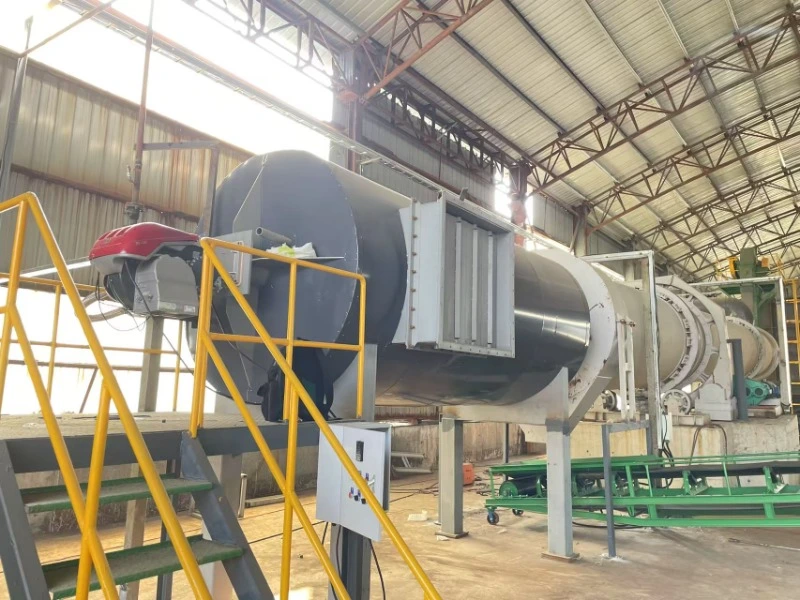
Root-Cause Diagnosis
An industrial burner unstable flame usually results from a changing fuel-air ratio, changing furnace or stack pressure, or a control component that does not repeat across load. DOE’s natural-gas reference table maps 2.0% dry O2 to about 9.5% excess air and 3.0% O2 to about 15.0% excess air under stated assumptions; the acceptable range remains burner- and site-specific [1].
Field Troubleshooting Priorities
- If natural-gas O2 is 2.0%, compare the observed excess air with DOE’s 9.5% reference before adjusting linkage [1].
- If O2 reaches 10.0%, DOE’s reference corresponds to 81.6% excess air; verify fan, damper, and air-leak causes [1].
- If excess air is reduced by 15 percentage points, validate CO and flame signal before claiming DOE’s approximate 1-point efficiency gain [1].
- If FGR or low-NOx controls were changed, compare every load point with the approved record because CO can rise under off-design tuning [2].
Air-Fuel Ratio and Draft
At a 400°F flue-gas-temperature-minus-combustion-air-temperature condition, DOE’s table calculates 80.8% combustion efficiency at 2.0% O2 and 75.6% at 10.0% O2 [1]. A universal industrial draft setpoint is not provided by these sources, so measure pressure at defined points and compare it with the OEM commissioning data.
Hold firing rate constant while trending O2, CO, fuel pressure, air pressure, draft, actuator position, and flame signal. Then repeat at low, mid, and high fire. O2 and draft moving together points to fan, damper, stack, or leakage investigation; fuel pressure moving first points to the gas train or supply.
Verified Troubleshooting Data
| Issue | Condition | Value | Evidence | Action |
|---|---|---|---|---|
| Low O2 reference | Natural gas; DOE assumptions | 2.0% O2 / 9.5% excess air | [1] | Compare to approved O2/CO window. |
| High excess air | Natural gas; DOE assumptions | 10.0% O2 / 81.6% excess air | [1] | Check air leaks, fan, and damper feedback. |
| Efficiency change | Other conditions comparable | ~1 point per 15% excess-air reduction | [1] | Verify CO and flame stability first. |
| Stack loss reference | Other conditions comparable | ~1 point per 40°F reduction | [1] | Review heat transfer and corrosion limits. |
| FGR change | Gas-fired industrial boiler; documented applications | Up to 73% NOx reduction | [3] | Obtain burner-specific engineering approval. |
Before Replacing the System
- Application fit: Confirm burner model, fuel, load range, furnace pressure, and fan capacity against the OEM-approved commissioning record.
- Limits: A generic O2, draft, or FGR setting is not a replacement specification; site values require confirmation.
- Operational risks: Evaluate CO, flame loss, stack temperature, NOx permit basis, fuel-train safety, and control integration.
- Required confirmation: Consult the OEM, local code and permit authority, insurer, site engineer, and commissioning test report before a retrofit.
Terms That Affect Diagnosis
- Excess air: Air supplied above the theoretical amount needed for complete combustion; it is inferred from flue-gas measurements under stated assumptions.
- Flue-gas O2: Oxygen measured in exhaust gas; it is an input to combustion tuning but is not a stand-alone safety or efficiency verdict.
- Draft: Pressure difference that influences furnace and flue-gas flow; the acceptable value depends on equipment documentation.
- FGR: Flue-gas recirculation, a combustion-control method that can alter flame temperature, mixing, and stability.
- Flame safeguard: The safety system that supervises flame presence and initiates the approved response to flame failure.
Frequently Asked Questions
REFERENCES AND DATA SOURCES:
- U.S. Department of Energy, “Improve Your Boiler’s Combustion Efficiency,” Steam Tip Sheet #4, provides the cited O2, excess-air, efficiency, and rule-of-thumb values.
- U.S. Environmental Protection Agency, “AP-42 Section 1.4 Natural Gas Combustion,” background document, discusses low-NOx burners, FGR, and incomplete-combustion considerations.
- U.S. Environmental Protection Agency, “Guidelines for Industrial Boiler Performance Improvement,” discusses FGR mixing, flame stability, and the cited documented gas-fired industrial-boiler NOx result.