
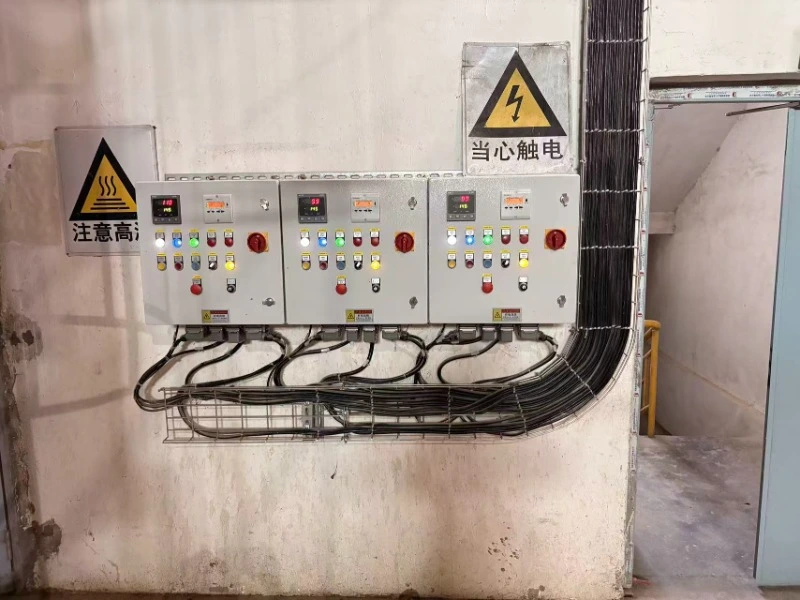
Industrial Burner Systems for Boilers: Selection, Control and Safety
Root-Cause Diagnosis
A boiler burner system improves efficiency and compliance only when fuel-air ratio, load turndown, draft, safety interlocks, and NOx basis are verified together. For many gas-fired boilers, about 2-3% dry flue-gas O2 is a practical tuning start, but CO, flame stability, OEM limits, and permit conditions decide acceptance [1].
Field Troubleshooting Priorities
- High stack loss: If excess air is above the commissioned range, test whether a 15 percentage-point reduction can recover about 1 percentage point of efficiency without increasing CO [1].
- Low-fire instability: If the burner fails below rated load, verify that the claimed 6:1 to 10:1 turndown is proven at low fire with stable O2, CO, draft, and flame signal.
- NOx uncertainty: If a proposal states NOx without oxygen basis, request mg/Nm3 or ppm with fuel, load, jurisdiction, and correction basis before approval [3].
- Safety reset: If flame failure or fuel-pressure trips repeat, test the flame safeguard, gas-pressure switches, air proving switch, purge sequence, and shutoff valves before changing the burner [5].
- Inspection planning: If the boiler has no recent inspection record, confirm annual inspection expectations and local jurisdiction rules before startup or retrofit scheduling [4].
Selection Criteria
A defensible boiler burner system selection starts with load range, fuel quality, required turndown, emissions basis, and the boiler’s furnace geometry. For many natural-gas boiler tuning cases, about 2-3% oxygen in dry flue gas corresponds to roughly 10-15% excess air, but the final setpoint must stay above the CO and flame-stability boundary [1].
An industrial boiler burner should not be selected only by maximum heat input. The buyer should check minimum stable firing rate, ignition sequence, burner management system compatibility, available draft, combustion-air temperature, and whether the boiler combustion system can accept low-NOx burner geometry or flue-gas recirculation without flame impingement.
- Turndown ratio: 6:1 to 10:1 is a common practical range for modulating gas boiler service; higher ratios require burner-specific proof and stable low-fire testing.
- Oxygen trim range: continuous trim is most useful when load or fuel composition varies enough to push excess air outside the commissioned band.
- NOx basis: mg/Nm3 or ppm values must state fuel, plant size, jurisdiction, averaging period, and oxygen reference basis [3].
- Safety integration: flame safeguard, fuel shutoff valves, purge timing, pressure switches, and interlocks must match OEM, code, insurer, and site requirements.
Control and Efficiency
Reducing excess air can recover about 1 percentage point of boiler efficiency for each 15 percentage-point reduction in excess air, when other conditions are comparable [1]. Reducing stack temperature by about 40 deg F can also recover about 1 percentage point of efficiency under comparable boiler conditions [1].
The control target is not the lowest possible oxygen reading. Low O2 can reduce stack loss, but it can also increase CO, soot, flame pulsation, delayed ignition risk, and flame-signal instability if fuel-air mixing is poor. A practical boiler combustion system therefore combines a tuned fuel-air curve with O2 trim, stack temperature monitoring, draft verification, and periodic combustion analysis.
Emissions and NOx
The EU Medium Combustion Plant Directive applies to combustion plants from 1 MW to less than 50 MW thermal input and lists NOx emission limit values by fuel and plant category [3]. For new medium combustion plants other than engines and gas turbines, the directive lists 100 mg/Nm3 NOx for natural gas under its stated table conditions, while site acceptance still depends on national transposition, permit terms, and oxygen-reference basis [3].
NOx control choices change the burner and boiler operating envelope. Low-NOx burners stage fuel and air to reduce peak flame temperature, while flue-gas recirculation dilutes combustion air and reduces thermal NOx formation; EPA AP-42 describes these as combustion-modification approaches for natural-gas combustion sources [2].
Safety Controls
Annual internal and external boiler inspections are widely used as a minimum planning interval in public boiler-safety guidance, but actual requirements depend on jurisdiction, insurer, and equipment type [4]. Burner safety checks should also be tied to the OEM manual, operating history, and any local code requirement for fuel-train proving or flame safeguard testing.
Critical boiler burner parts include automatic fuel shutoff valves, pressure switches, combustion-air proving switches, flame detectors, ignition transformers, pilot assemblies, burner management controls, and modulating actuators. A failed safety component can create an ignition, explosion, CO, or nuisance-trip risk, so replacement parts should match approval ratings, timing, voltage, pressure range, and safety function.
Before Replacing the System
- Application fit: Confirm the boiler pressure vessel, refractory, draft system, fuel supply, and controls cabinet can support the new burner across high fire, mid fire, and low fire.
- Limits: Low-NOx burners or FGR may need site validation when furnace volume, flame shape, air temperature, or recirculation path differs from the tested design [2].
- Operational risks: Check CO, flame instability, stack temperature, NOx permit basis, fuel-train safety, downtime, and controls integration before purchase.
- Required confirmation: Use the OEM manual, local code, permit authority, insurer, site engineer, combustion test, and commissioning report as acceptance evidence.
Terms That Affect Diagnosis
- Industrial boiler burner: A packaged or engineered burner that meters fuel and combustion air into a boiler furnace under a defined startup, modulation, and shutdown sequence.
- Boiler combustion system: The burner, air fan, fuel train, draft path, controls, flame safeguard, and monitoring instruments that determine heat release and combustion safety.
- Flue-gas O2: Oxygen remaining in dry exhaust gas; it indicates excess air but must be interpreted with CO, load, leakage, and analyzer condition [1].
- Excess air: Air supplied above stoichiometric demand; too much raises stack loss, while too little can raise CO and flame-instability risk [1].
- Flue-gas recirculation: A NOx control method that returns part of the exhaust gas to combustion air to lower flame temperature and thermal NOx formation [2].
- NOx basis: NOx must be reported with unit, oxygen correction, fuel, load, and jurisdiction because permit values are not interchangeable [3].
Verified Troubleshooting Data
| Issue | Condition | Value | Evidence | Action |
|---|---|---|---|---|
| Excess air loss | Comparable boiler conditions | 15 percentage-point excess-air reduction equals about 1 percentage-point efficiency gain | DOE steam tip sheet [1] | Tune only while checking CO and flame stability. |
| Stack temperature loss | Comparable boiler conditions | 40 deg F reduction equals about 1 percentage-point efficiency gain | DOE steam tip sheet [1] | Inspect heat-transfer surface, economizer, excess air, and fouling. |
| NOx compliance | EU new medium combustion plant, natural gas, other than engines and gas turbines | 100 mg/Nm3 NOx under directive table conditions | Directive (EU) 2015/2193 [3] | Confirm local transposition, permit basis, fuel, and oxygen correction. |
| NOx control method | Natural-gas combustion source | Low-NOx burners and flue-gas recirculation are combustion modifications | EPA AP-42 external combustion materials [2] | Require burner-specific CO, NOx, O2, and load test data. |
| Inspection interval | Public boiler safety planning | Annual internal and external inspection commonly referenced | National Board guidance [4] | Check jurisdiction, insurer, and OEM maintenance schedule. |
Procurement Checklist
At least five measured values should appear in every serious boiler burner system proposal: firing rate range, turndown ratio, expected flue-gas O2 range, NOx guarantee with basis, and stack-temperature or efficiency assumption. If any value is missing, the buyer should request it before comparing suppliers.
- Data sheet: maximum and minimum heat input, fuel type, available turndown, and combustion-air requirements.
- Fuel train: valve train rating, shutoff-valve arrangement, pressure switches, proving sequence, and local approval basis.
- Commissioning form: O2, CO, NOx, stack temperature, draft, gas pressure, flame signal, and load point.
- Spare parts: flame detector, actuator, pressure switch, ignition component, fuel shutoff valve, and controller module.
Frequently Asked Questions (FAQ)
REFERENCES AND DATA SOURCES:
- U.S. Department of Energy, “Improve Your Boiler’s Combustion Efficiency,” Steam Tip Sheet, supports excess-air, oxygen, stack-temperature and efficiency rules of thumb for boiler tuning.
- U.S. Environmental Protection Agency, AP-42 Chapter 1 external combustion source materials, supports natural-gas combustion and combustion-modification context for NOx control.
- EUR-Lex, Directive (EU) 2015/2193 on limitation of emissions from medium combustion plants, supports 1-50 MW scope and NOx emission limit tables by fuel and plant type.
- National Board of Boiler and Pressure Vessel Inspectors, boiler inspection and safety guidance, supports inspection planning and jurisdiction-dependent boiler safety practice.
- National Board of Boiler and Pressure Vessel Inspectors, boiler controls and safety-device maintenance guidance, supports periodic checking of combustion controls, safety devices, and operating instruments.