Industrial Burner Services: The Definitive Guide to Annual Emission Commissioning and Maintenance
Industrial operators face intensifying pressure from both global environmental regulators and rising fuel costs. The burner is the heart of the thermal process; however, it is also the component most susceptible to efficiency degradation and safety malfunctions. Engaging in high-level industrial burner services is no longer a matter of simple repair—it is a strategic investment in operational continuity and sustainability.
What Do Professional Industrial Burner Services Include?
Professional industrial burner services encompass comprehensive thermal energy audits, routine preventative maintenance, gas/diesel/dual-fuel system retrofitting, and the integration of advanced digital control platforms. These services are designed to move beyond the “break-fix” mentality, focusing instead on optimizing the entire combustion loop to ensure that the burner operates within its specific design envelope throughout its lifecycle.
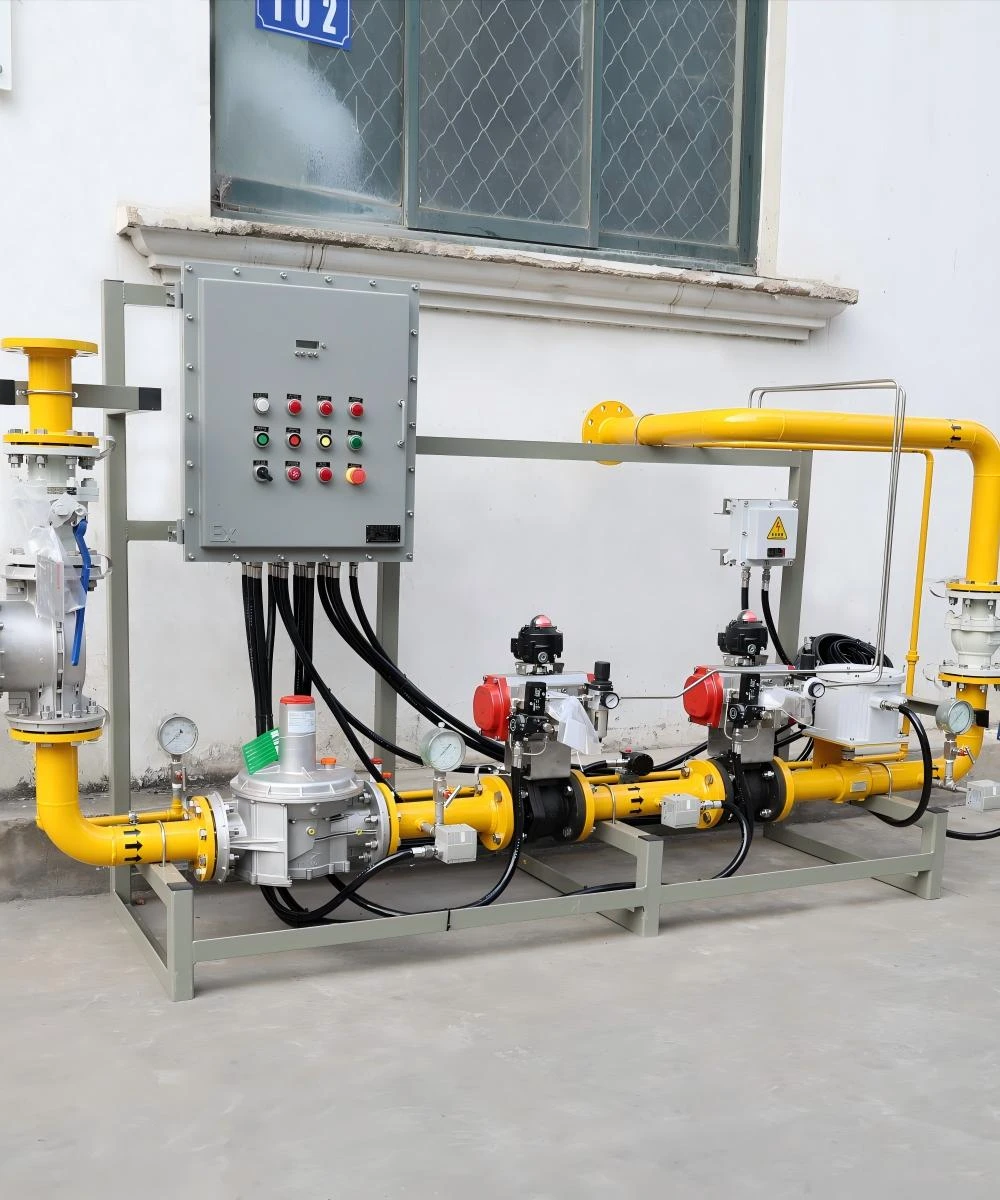
A core component of these services is the mechanical and electrical inspection of the Burner Management System (BMS). The BMS serves as the brain of the unit, managing the safe start-up, operation, and shutdown sequences. Professional technicians evaluate the integrity of flame scanners, ignition transformers, and fuel safety shut-off valves (SSOVs). These inspections verify that safety interlocks will engage instantly during a flame-out or pressure surge, preventing the accumulation of unburned fuel in the combustion chamber—a condition that can lead to devastating furnace explosions.
Beyond safety, these services focus on fuel-to-air ratio optimization. Over time, mechanical linkages can wear down, leading to “hysteresis” or slop in the control valves. This results in the burner receiving either too much or too little air for the amount of fuel being injected. Industrial burner services utilize high-precision electronic actuators and O2 trim systems to maintain a precise mixture, which can improve overall plant fuel efficiency by approximately 3-5% [1]. For high-output steam plants, this gain translates into hundreds of thousands of dollars in annual fuel savings.
Finally, professional services include the modernization of combustion heads. Retrofitting an older burner with a Low-NOx or Ultra-Low NOx head can significantly decrease the environmental footprint of a facility. This involves the application of Flue Gas Recirculation (FGR) or staged combustion techniques, which are essential for meeting the modern emissions limit of less than 30 mg/Nm³ for nitrogen oxides [2].
What Is the Step-by-Step Annual Emission Commissioning and Maintenance Process?
The annual emission commissioning and maintenance process is a systematic multi-phase protocol ensuring safety, mechanical integrity, and regulatory alignment through precise air-fuel ratio modulation. This process is typically mandated by insurance providers and local environmental agencies to ensure the equipment remains fit for purpose.
- Phase 1: Pre-Shutdown Baseline: Technicians perform flue gas analysis at various firing rates to identify existing inefficiencies before the system is taken offline.
- Phase 2: Mechanical Overhaul: Deep-cleaning of the burner head, diffuser plates, and nozzles. Ultrasonic cleaning is used for liquid fuel nozzles to prevent spray pattern deviation.
- Phase 3: Safety Interlock Testing: Rigorous leak tests on the gas train and verification of all high/low pressure switches to ensure fail-safe operation.
- Phase 4: Combustion Tuning: The technician “maps” performance across the modulation range, targeting O2 levels between 2% and 4% for gas units [3].
The Economic and Environmental ROI of Regular Service
Neglecting industrial burner services leads to a phenomenon known as “Efficiency Drift.” As components age, the burner naturally moves away from its optimal settings. Annual maintenance prevents unplanned downtime, which in high-volume manufacturing can cost a facility thousands of dollars per hour in lost revenue. Identifying a failing flame scanner during a scheduled inspection allows for a low-cost replacement compared to a multi-day emergency shutdown.
From an environmental perspective, the reduction of NOx and CO emissions is a key driver. Properly commissioned burners often operate with 20% lower NOx emissions compared to those that have been neglected for more than 18 months [4].
Frequently Asked Questions (FAQ)
REFERENCES AND DATA SOURCES:
- U.S. Department of Energy: Thermal Efficiency and Burner Fuel Savings Benchmarks
- EPA: International Combustion Emission Standards & NOx Regulatory Framework
- ASME CSD-1: Principles of Combustion Engineering and Safety Control Guidelines
- IEA: Global Industrial Maintenance Survey – Impact of Neglected Combustion Systems
