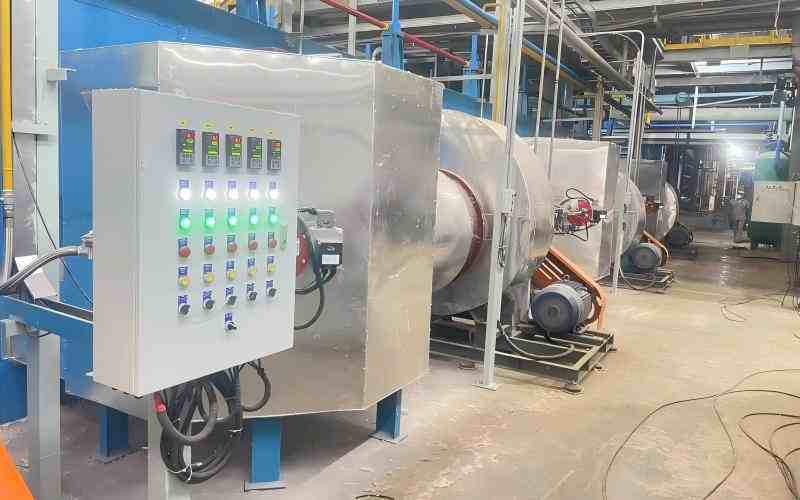
How to Choose an Industrial Boiler Burner Based on Steam Pressure and Back Pressure: A Comprehensive Selection Guide
Choosing the correct industrial boiler burner is a critical decision that impacts the efficiency, safety, and operational lifespan of your entire thermal system. It is not merely about matching the “horsepower” of the boiler; it requires a deep technical understanding of how steam pressure requirements and furnace back pressure interact with the burner’s firing capabilities.
What is the Relationship Between Steam Pressure and Industrial Boiler Burner Selection?
Steam pressure determines the required thermal intensity and the mechanical robustness of the burner’s fuel delivery system. When selecting a burner, the target steam pressure of the boiler dictates the temperature at which the water must evaporate, which in turn influences the heat flux required within the furnace. High-pressure steam applications (e.g., above 150 psi) often require burners with more sophisticated control systems to manage the rapid heat transfer needed to maintain pressure during load swings.
As steam pressure increases, the density of the steam changes, affecting the boiler’s heat absorption rate. The burner must be capable of providing a stable flame that can handle these high-temperature environments without causing localized overheating of the boiler tubes. Furthermore, the fuel train must be sized to deliver fuel at a pressure that can overcome the internal pressure of the combustion chamber, ensuring a consistent air-fuel mixture regardless of the steam demand.
How Does Boiler Back Pressure Affect Burner Fan Performance?
Boiler back pressure is the resistance to flow that the burner’s blower must overcome to push combustion air through the furnace and out the stack. If the burner’s fan does not have sufficient static pressure to overcome this resistance, the boiler will experience incomplete combustion, soot buildup, and potential flame pulsations. In modern high-efficiency boilers, such as three-pass wet-back designs, the back pressure is significantly higher due to the increased surface area and more complex flue gas paths.
When reviewing a burner’s technical datasheet, you must look at the “Fan Curve.” This graph illustrates the relationship between the volume of air delivered and the static pressure the fan can generate. A common industrial standard is that the burner fan should be capable of producing a static pressure that exceeds the maximum boiler back pressure by a safety margin of at least 15% to 20% [1]. This ensures that even as the boiler accumulates minor fouling over time, the burner can still deliver the oxygen required for clean combustion.
How Do You Calculate the Required Burner Capacity Based on Steam Output?
To calculate the required burner capacity, you must divide the boiler’s rated steam output by the estimated fuel-to-steam efficiency of the boiler unit. For example, if an industrial boiler is rated to produce 10,000 lbs of steam per hour, it typically requires a burner capable of delivering approximately 12 to 13 million BTU per hour (MMBtu/hr), depending on the feed-water temperature and the efficiency rating of the vessel.
The formula generally used by engineers is: Burner Input = (Steam Output × Enthalpy Change) / Boiler Efficiency. It is essential to account for the fact that as steam pressure rises, the enthalpy (total heat) required to produce that steam also increases slightly. Furthermore, modern high-efficiency industrial burners are designed to operate at an efficiency of 80% to 85% [2] when properly matched with the boiler shell. Selecting a burner that is oversized can lead to “short-cycling,” leading to mechanical wear and wasted fuel.
What Role Does the Turndown Ratio Play in Managing Steam Pressure?
The turndown ratio of a burner allows the system to maintain stable steam pressure by adjusting the firing rate to match fluctuating demand without shutting down. A high turndown ratio (such as 10:1 or 12:1 [3]) means the burner can operate at as low as 8.3% to 10% of its maximum capacity. This is particularly crucial in industrial processes where steam demand varies significantly throughout the day.
In systems with low turndown ratios (e.g., 3:1), the burner is forced to cycle off when steam demand drops below 33% of capacity. Every time a burner cycles off, it must perform a “pre-purge” and “post-purge,” which involves blowing cold air through the boiler to clear any unburned fuel. This process strips heat from the boiler water and exhausts it out the stack, significantly reducing overall seasonal efficiency.
Why is Flame Geometry Critical for High Back Pressure Boilers?
The flame geometry must be carefully matched to the furnace dimensions to prevent “flame impingement,” which occurs when the flame touches the furnace walls due to high back pressure. In high back pressure environments, the combustion gases are denser and move more slowly, which can cause the flame to expand radially. If the flame strikes the boiler tubes, it creates “hot spots,” leading to metal fatigue and potentially catastrophic boiler failure.
How Does Fuel Type and Pressure Influence Burner Selection?
The type of fuel determines the fuel train design and the pressure required at the burner inlet to overcome the boiler’s internal back pressure. Gas burners require a specific “regulated gas pressure” to function correctly. If your facility has low gas line pressure, you may need a burner with a larger gas manifold or a dedicated gas booster pump to ensure the fuel can penetrate the high-pressure environment of the combustion chamber.
For liquid fuels, the burner must atomize the fuel into a fine mist. In high back pressure boilers, air-atomized or steam-atomized burners are often preferred over mechanical pressure-atomization because they produce a more consistent droplet size, which is easier to burn completely when the furnace is under high resistance.
