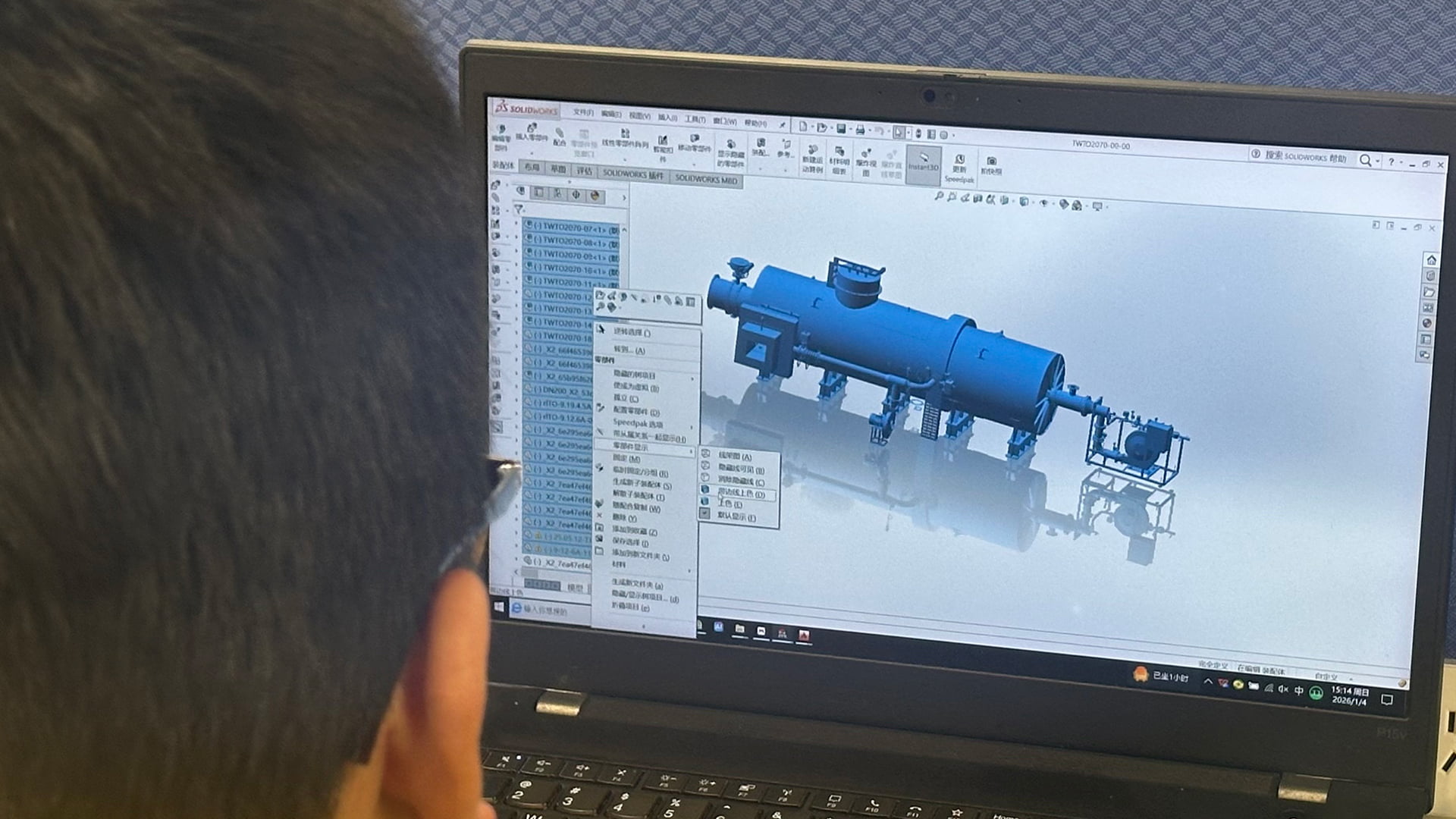
Selecting an industrial combustion system is not simply a matter of choosing a burner by heat output. In a customized process-heating project, the burner, fuel train, safety system, controls, combustion air, emissions strategy, and installation layout need to work together.
For that reason, “best supplier” should not be treated as a universal ranking. A supplier that is well suited to a refinery heater retrofit may not be the strongest option for a drying line, an industrial oven, a thermal-oil system, or a compact skid-mounted package. The practical goal is to create a technically appropriate shortlist and compare proposals on the same design basis.
What Should a Customized Combustion System Include?
A technically complete proposal should be based on actual process conditions, not only a requested capacity figure. Before requesting quotations, prepare a project data sheet covering the following items:
- Application type: furnace, kiln, dryer, oven, boiler, hot-air heater, thermal oxidizer, or direct-fired process heater.
- Required heat duty, operating range, hours of operation, and expected turndown ratio.
- Available fuel, fuel pressure, fuel composition, and any dual-fuel or future fuel-switching requirement.
- Target process temperature, combustion-chamber conditions, flame shape, and allowable heat-flux distribution.
- Emissions requirements, especially the applicable NOx limit and measurement basis.
- Electrical supply, hazardous-area classification, control interfaces, installation space, and local code requirements.
Industrial Combustion Suppliers to Consider
The suppliers below are not ranked from best to worst. They are included because their public materials indicate relevant industrial combustion capabilities. Final suitability must be confirmed through a project-specific technical review.
| Supplier | Publicly Stated Focus | Potential Project Fit |
|---|---|---|
| Zeeco | Process burners, boiler and duct burners, burner-management systems, controls, and retrofits. | Complex direct-fired heaters, refinery and petrochemical applications, emissions-focused retrofits. |
| Weishaupt | Industrial gas, oil, and dual-fuel burners with modular system configurations. | Industrial boilers, air heaters, and selected process-heating duties. |
| Riello | Process burners and industrial burner ranges for light industrial and larger thermal applications. | Ovens, dryers, boilers, steam generators, and thermal-oil systems. |
| Heatflam | Customized burner systems, gas and oil valve trains, controls, hot-air heating, and system integration. | Custom skids, integrated fuel-train and control scope, compact layouts, and industrial process-heating projects. |
1. Zeeco: A Candidate for Complex Process Heater and Retrofit Scopes
Zeeco is relevant when the project includes direct-fired process heaters, industrial furnace burners, combustion controls, or major retrofit requirements. Its public product information covers process burners, boiler and duct burners, ignition systems, burner-management systems, and retrofit solutions.
This type of scope can be especially important in refining, petrochemical, chemical, and other continuous-process industries, where a burner change may affect flame pattern, furnace heat flux, draft, fuel distribution, safety logic, and emissions performance.
2. Weishaupt: A Candidate for Industrial Burner Applications with Modular Requirements
Weishaupt publishes industrial burner information covering gas, oil, and dual-fuel applications. Its industrial burner materials describe use with hot-water boilers, steam boilers, air heaters, and certain process applications.
For customized installations, a modular arrangement can be useful when the fan, control panel, gas train, pumping equipment, or preheating equipment must be arranged around specific site limitations. The exact burner model, fuel compatibility, and operating limits should always be verified against the final technical datasheet.
3. Riello: A Candidate for Process Burners Across Multiple Heating Duties
Riello provides process burner and industrial burner ranges for applications from light industrial ovens and dryers through to larger boiler, steam, thermal-oil, and industrial process systems. Its published ranges include burners designed for specific application types and capacities.
Riello may be worth evaluating when the project has a clearly defined burner duty and the buyer needs a proven burner platform matched to a boiler, oven, dryer, or heat generator. Confirm the local model availability, controls, fuel train, electrical configuration, and applicable regional standard before selection.
4. Heatflam: A Candidate for Customized System Integration
Heatflam is a Shanghai-based industrial combustion solution provider. Its stated scope includes customized burner systems, gas and oil valve trains, combustion controls, hot-air heating systems, ignition systems, low-NOx retrofit work, and industrial thermal-process solutions.
Heatflam may be a suitable option when the buyer needs more than a standalone burner—such as an engineered valve train, skid-mounted piping arrangement, control cabinet, burner-management logic, ignition package, and coordinated commissioning support. Final system design should be confirmed using the project’s fuel, heat duty, pressure, electrical, layout, and operating data.
How to Compare Combustion System Proposals
Do not compare quotations by equipment price alone. Ask each shortlisted supplier to respond to the same technical specification and make the scope boundaries visible.
- Design basis: burner type, flame geometry, capacity range, turndown, fuel assumptions, and combustion-air conditions.
- Fuel-train scope: valves, regulators, filters, pressure switches, safety shutoff valves, venting, leak testing, and skid fabrication.
- Controls and safety: flame scanner, ignition system, BMS sequence, trips, alarms, safety PLC, control panel, and DCS/PLC interface.
- Documentation: P&ID, general arrangement drawing, wiring diagram, I/O list, cause-and-effect matrix, operating manual, and test records.
- Commissioning: cold checks, startup support, combustion tuning, safety testing, operator training, and spare-parts support.
A Practical Supplier-Selection Process
- Prepare a complete process data sheet and site layout.
- Send the same technical information to every shortlisted supplier.
- Request a technical deviation list in addition to the commercial quotation.
- Compare assumptions, inclusions, exclusions, safety scope, controls, and commissioning responsibility.
- Hold a technical clarification meeting before issuing the purchase order.
- Include the final performance basis and documentation deliverables in the contractual scope.
Frequently Asked Questions
Send Heatflam your process application, fuel type, thermal capacity, target temperature, emissions requirement, and available installation space. Our team can review the project and propose an appropriate combustion-system scope.
REFERENCES AND DATA SOURCES:
- Heatflam — Industrial Burner Systems (accessed July 22, 2026).
- Zeeco — Process Burners (accessed July 22, 2026).
- Weishaupt — Industrial Burner Information (accessed July 22, 2026).
- Riello — Process Burners (accessed July 22, 2026).
- Riello — DR SE FGR Industrial Burner Series (accessed July 22, 2026).
