
How to Choose an Industrial Burner for Your Heating Process
Root-Cause Diagnosis
Choose an industrial burner by matching heat duty, fuel quality, turndown, chamber geometry, and verified emissions data. For many well-designed natural-gas systems, 10% excess air is attainable, but too little air can create CO and flame-stability risk [1]. Final acceptance depends on OEM limits, local code, permit basis, and commissioning tests.
Field Troubleshooting Priorities
- Low efficiency: If excess air is above the tested need, compare the fuel loss against the 1% efficiency gain per 15 percentage-point excess-air reduction rule [1].
- High stack loss: If stack temperature can be reduced safely, use the 40 F stack-temperature rule as a screening value before changing burner hardware [1].
- NOx constraint: If a new natural-gas MCPD plant is in scope, verify whether the 100 mg/Nm3 NOx value applies before accepting a gas burner quote [3].
- Control retrofit: If low-NOx plus FGR is proposed, confirm the 60-90% NOx reduction range is realistic for the burner and furnace geometry [2].
- Safety readiness: If weekly flame-failure cutoff timing or fuel shutoff valve checks are not documented, hold approval until the test log is updated [4].
Start With Duty
An industrial burner should be sized from the process heat load, not from the nameplate of the old burner. For many well-designed natural-gas boiler applications, about 10% excess air is attainable, while too little air can create unburned fuel, smoke, soot, and carbon monoxide risk [1].
Start by confirming peak heat demand, minimum stable load, chamber pressure, combustion-air temperature, available gas pressure, oil viscosity, atomizing medium, and expected operating hours. A gas burner is usually preferred where pipeline gas quality and pressure are stable, while an oil burner needs verified atomization, preheat, filtration, and storage conditions.
Match Turndown
Turndown ratio should cover the normal operating range without forcing frequent cycling. If the burner cannot hold stable combustion at low fire, excess air and CO can rise even when the high-fire test looks acceptable [2].
For steady process heating, a lower turndown burner may be acceptable if the load stays near design capacity. For batch ovens, dryers, heat-treatment furnaces, and seasonal boilers, request documented minimum firing rate, burner management limits, air-fuel linkage accuracy, and flame-signal stability.
Control Excess Air
Reducing excess air can improve efficiency, but lower flue-gas oxygen is not automatically better. DOE/NREL states that boiler efficiency can rise by about 1 percentage point for each 15 percentage-point reduction in excess air or each 40 F reduction in stack gas temperature when other conditions are comparable [1].
For a natural-gas burner, the commissioning target often starts around 2-3% flue-gas oxygen or about 10-15% excess air, then is adjusted for CO, flame stability, burner design, and site rules. Oil burners may require more excess air because droplet atomization, viscosity, and mixing are harder to control than premixed or nozzle-mixed gas combustion.
Check Emissions
NOx acceptance must be tied to fuel, burner type, oxygen correction basis, plant size, and local permit conditions. Under the EU Medium Combustion Plant Directive, new natural-gas medium combustion plants other than engines and gas turbines have a NOx limit value of 100 mg/Nm3 in Annex II, Part 2, Table 1 [3].
EPA AP-42 identifies thermal NOx as the principal NOx mechanism in natural-gas combustion and states that NOx levels vary with combustion-air temperature, load, excess oxygen, combustor size, and design. Low-NOx burners can reduce NOx by 40-85%, while low-NOx burners combined with flue gas recirculation can reduce NOx by 60-90% in suitable natural-gas boiler applications [2].
Select Burner Type
A gas burner is often the first option when the process needs clean combustion, fast modulation, and lower fuel-handling complexity. An oil burner remains appropriate where gas is unavailable, dual-fuel resilience is needed, or fuel economics justify the added atomization and maintenance burden.
For high-uniformity heat treatment, prioritize flame shape, recirculation pattern, and temperature-control tolerance before selecting a nominal capacity. For dryers, kilns, and thermal oil heaters, verify allowable flame length, refractory limits, product contamination risk, and startup purge requirements.
Verify Controls
Safety acceptance should include field testing, not only component certificates. The National Board maintenance checklist recommends regular checks of burner flame, control linkage, flame signal strength, flame failure cutoff timing, fuel shutoff valve closing, interlocks, safety shutoff valve leakage, and combustion controls [4].
For a new industrial burner, require a burner management sequence, purge calculation, ignition trial timing, low-fire start proof, high/low fuel pressure switches, air-flow proving, flame safeguard settings, and documented trip tests. Actual acceptance limits depend on the OEM manual, local code adoption, insurer requirements, permit basis, and site engineering review.
Before Replacing the System
- Application fit: Confirm equipment type, fuel, heat duty, turndown, chamber draft, and process temperature before choosing a gas burner, oil burner, or dual-fuel burner.
- Limits: Do not assume a higher-capacity process heating burner will fit the existing furnace, kiln, dryer, boiler, or thermal oil heater without pressure-drop and flame-shape validation.
- Operational risks: Check CO, flame instability, stack temperature, NOx permit basis, fuel-train safety, downtime, and controls integration before purchase.
- Required confirmation: Request OEM limits, local code review, permit authority input, insurer acceptance, site engineer approval, and a combustion commissioning report.
Terms That Affect Diagnosis
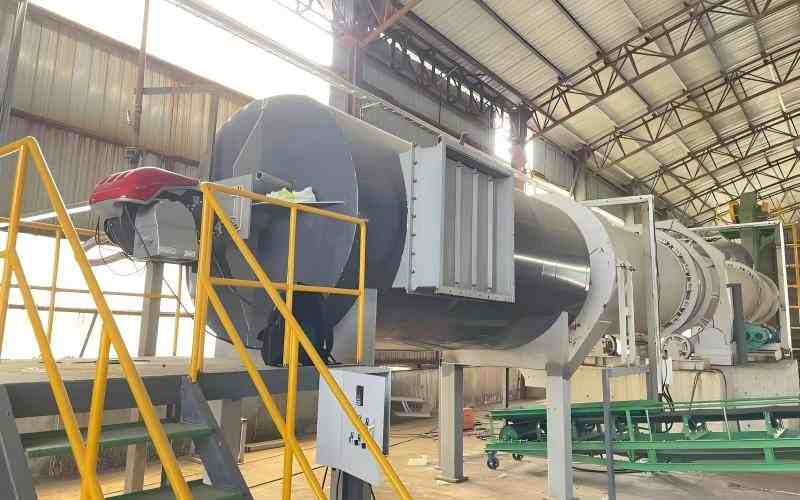
- Industrial burner: A burner package that mixes fuel and combustion air to release controlled heat into a boiler, furnace, kiln, dryer, or thermal oil heater.
- Gas burner: A burner designed for gaseous fuels such as natural gas or LPG, usually selected where stable gas pressure and clean combustion are available.
- Oil burner: A burner using liquid fuel that typically requires atomization, filtration, viscosity control, and more maintenance checks than a comparable gas burner.
- Flue-gas oxygen: A measured indicator used to infer excess air and combustion efficiency; it must be reviewed with CO and flame stability, not in isolation.
- FGR: Flue gas recirculation returns part of the exhaust gas to the burner air stream to lower flame temperature and reduce thermal NOx formation.
- NOx basis: The reported NOx value must state units, oxygen correction, fuel, load, and jurisdiction before it can be compared with a permit or regulation.
Verified Troubleshooting Data
| Issue | Condition | Value | Evidence | Action |
|---|---|---|---|---|
| Excess air loss | Well-designed natural-gas boiler system | 10% excess air attainable | DOE/NREL combustion efficiency guidance [1] | Measure O2 and CO before reducing air further. |
| Efficiency opportunity | Comparable operation after tuning | 1% per 15 percentage-point excess-air reduction | DOE/NREL rule of thumb [1] | Use as screening, then verify by combustion test. |
| Stack temperature loss | Comparable operation after heat recovery or tuning | 1% per 40 F stack-temperature reduction | DOE/NREL rule of thumb [1] | Check condensation, draft, and process limits first. |
| NOx retrofit | Natural-gas boiler with suitable low-NOx burner and FGR | 60-90% NOx reduction | EPA AP-42 Section 1.4 [2] | Confirm flame stability and CO after retrofit. |
| Regulatory screening | New natural-gas MCPD plant, excluding engines and gas turbines | 100 mg/Nm3 NOx | EU MCPD Annex II, Part 2, Table 1 [3] | Verify jurisdiction, oxygen basis, and permit text. |
| Safety controls | Boiler burner maintenance program | Daily to semiannual checks | National Board checklist [4] | Request logs for flame, valves, interlocks, and combustion controls. |
Compare Bids
A credible industrial burner proposal should state capacity, fuel range, turndown, expected oxygen level, NOx and CO basis, fan power, control method, safety devices, and commissioning scope. A bid that omits oxygen, CO, stack temperature, or permit basis is not ready for engineering approval.
Use a comparison sheet with maximum and minimum heat release, fuel pressure range, atomizing pressure for oil, expected flue-gas O2, excess-air range, NOx at stated oxygen basis, turndown ratio, motor power, required chamber draft, and commissioning test points.
Frequently Asked Questions
REFERENCES AND DATA SOURCES:
- U.S. Department of Energy / National Renewable Energy Laboratory, “Improve Your Boiler’s Combustion Efficiency: Office of Industrial Technologies Steam Energy Tips No. 4,” OSTI program document page, states the excess-air, stack-temperature, and combustion-efficiency data used here.
- U.S. Environmental Protection Agency, “AP-42, Section 1.4: Natural Gas Combustion,” PDF technical chapter; the direct PDF is used because EPA provides this AP-42 section as a downloadable file supporting NOx formation, CO risk, FGR, low-NOx burners, and control ranges.
- European Union, “Directive (EU) 2015/2193 on the limitation of emissions of certain pollutants into the air from medium combustion plants,” official EUR-Lex PDF legal text; the direct PDF is used because Annex II tables are published in the official directive file.
- National Board of Boiler and Pressure Vessel Inspectors, “Boiler Maintenance Checklist,” public guidance page, supports regular checks for burner flame, flame signal, cutoff timing, fuel shutoff valves, interlocks, and combustion controls.